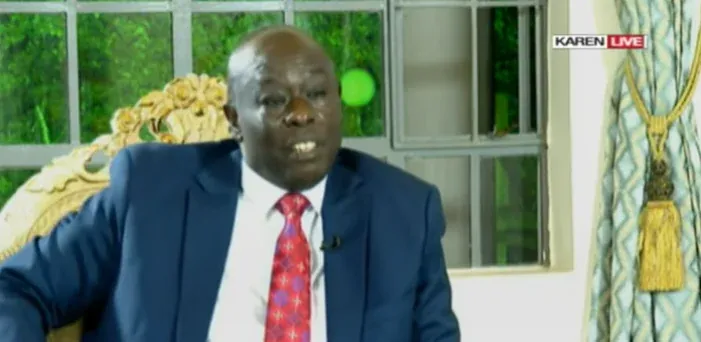
Former Deputy President Rigathi Gachagua told a KTN interview on Wednesday October 28, 2026 that Kenya is experiencing a political moment comparable to the one that preceded the 2002 General Election, suggesting the growing public mood against President William Ruto could push opposition leaders toward a single presidential candidate.
He said, “We are having a 2002 moment in all facets, and we are having a moment where the country has decided in unison without holding any meeting anywhere, from the Coast to Nyanza, from western to Rift Valley, from central to northeastern, Nairobi here, Kenyans have decided they want change, and they have decided that William Ruto must be one term,”.
Gachagua added that the current climate is more intense than that of 2002 because “In 2002, people were united against a project of an outgoing president. Today they are united against a sitting president,” he said.
He warned that any opposition figure who runs independently would struggle for support, stating, “One candidate would decide to go on his own all the way and I prophesy, just like it happened in 2002, that candidate will go with no followers,” and declined to identify the individual.
The former deputy president said the sentiment he described cuts across regions from the Coast to Nyanza, Western, Central, North Eastern and Nairobi, and cited the recent Mbeere North by-election as an example of parties making concessions, noting that the Democracy for the Citizens Party (DCP) agreed to let the Democratic Party contest the seat because it had previously held it.
The 2002 election saw the National Rainbow Coalition (NARC) unite opposition parties behind Mwai Kibaki, ending KANU’s decades-long rule, a historic reference point that Gachagua invoked while acknowledging that his view of a unified opposition is his political assessment rather than an independently verified national consensus.
Related reporting
More Politics →
Wiper Party Defends Kalonzo Over 2018 Photo With Deputy President Ruto

ODM and UDA Brief Secretary-General on Joint Manifesto Ahead of 2027 Election
Jubilee Party Appoints Coalition Committee and Interim Officials