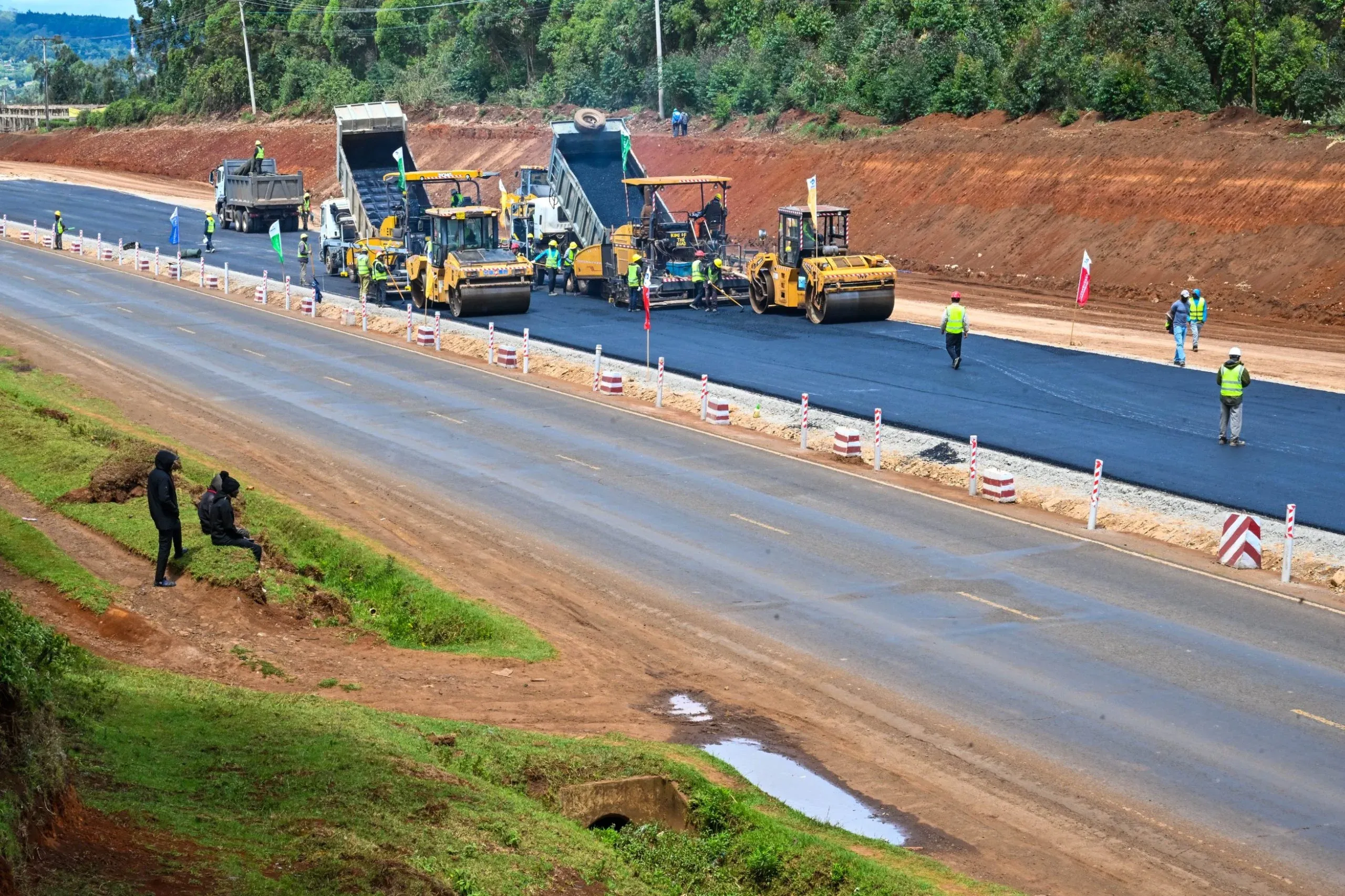
Transport Cabinet Secretary Davis Chirchir said the government will aim to lay at least one kilometre of asphalt each day on the Rironi-Naivasha highway to meet a revised opening target before December 2026.
Chirchir told an international TV station on Saturday that the project has returned to schedule after earlier bitumen shortages linked to the United States-Israel-Iran conflict were resolved and ten new pavers have arrived in Mombasa.
“We have got 10 already in Mombasa. And with asphalt from the country, pavers in the country, I can give almost a guarantee that the road in Naivasha will be fully done,” he said.
The minister added that once the base layer is complete, the remaining work is a “top polishing layer”, allowing contractors to achieve “a kilometre every day” and accelerate the final asphalt application.
Officials reported that more than 90 teams are now deployed along the 60-kilometre stretch, with construction previously progressing at about four kilometres per week before the new acceleration plan.
The government missed an October 30 deadline for opening the dual carriageway, but after an inspection with the National Assembly’s Transport and Infrastructure Committee, the opening has been pushed to early December 2026.
The Rironi-Naivasha phase is financed through a public-private partnership with China Road and Bridge Corporation under a build-operate-transfer model, whereby the private investor funds construction and will recover its investment over roughly 30 years before transferring the road to the state.
The Rironi-Gilgil section of the project is estimated to cost about US$675 million, while the entire Rironi-Mau Summit highway corridor is budgeted at KSh200 billion.
PPP Kenya notes that the Northern Corridor, which includes the expanded highway, carries nearly 40 percent of Kenya’s trade traffic, linking the Port of Mombasa to land-locked neighbours such as Uganda, Rwanda and the Democratic Republic of Congo.
The upgraded road is expected to ease congestion on the Nairobi-Naivasha route, improve freight movement and boost economic activity for businesses and landowners along the corridor.
Local operator identified as Pluto said the project will create jobs and raise land values, stating “Jobs will be created as many people will want to invest along the corridor and land value will rise, and so those with huge parcels of land here will really benefit.”
Toll charges are expected to be introduced once the highway becomes operational, providing a revenue stream for the private partner.
Related reporting
More General News →
Immigration PS Belio Kipsang Announces Green Service Passport for Public Servants

Law Society of Kenya Leads Protest Over Missing Advocate Abshir Ahmedsadak Abdi
Paul Nthenge Mackenzie Sentencing Begins in Mombasa High Court