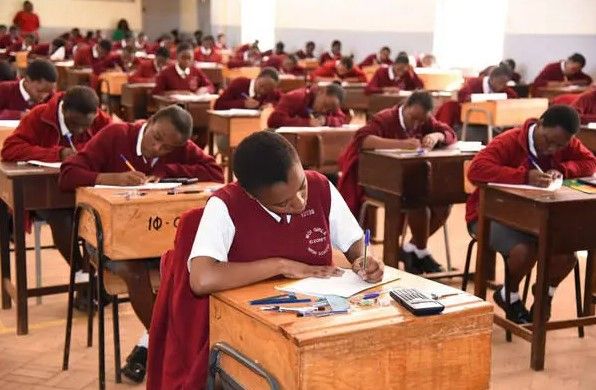
The Kenya Union of Post-Primary Education Teachers (KUPPET) has kept a directive for its members to stay away from Kenya National Examinations Council (KNEC) activities, warning that the 2026 Kenya Certificate of Secondary Education (KCSE) could be paralysed if examiner pay and conditions are not improved.
Rehearsals for the KCSE are scheduled to begin on Friday, followed by oral and practical papers on Monday, October 19 in French, German, Kenyan Sign Language, music and Arabic, with the main written examinations set to run from Monday, November 2 to Friday, November 20.
KUPPET says the rates paid to teachers contracted for examination management and marking are far below professional standards, noting that unskilled construction workers earn at least KSh700 per day while examiners receive daily allowances of KSh150, a figure unchanged since 1990.
Secretary General Akelo Misori said the union is demanding a minimum flat rate of KSh4,000 per day for supervisors and related officials and at least KSh100 for marking a single paper, and called on the Salaries and Remuneration Commission to urgently review the compensation framework.
Deputy Secretary General Moses Nthurima added that supervisors are paid KSh600, centre managers receive KSh500 to KSh550, invigilators KSh430 to KSh510, and that marking allowances range from KSh35 to KSh75 per script, with an example of a paper being marked at KSh55.
The National Treasury released KSh1.5 billion on July 7 to settle outstanding balances for 2025, and Education Cabinet Secretary Julius Ogamba announced two days later that KNEC had transferred the funds to examiners’ accounts.
Despite the July disbursement, KUPPET maintains that the wider dispute over pay and working conditions remains unresolved and warned that without assurances the examination management for the entire year could be disrupted; KNEC has not issued a response.
The KCSE season, which is the second-last sitting under the 8-4-4 system, will run alongside the Kenya Primary School Education Assessment and Kenya Junior School Education Assessment, involving a record 3.6 million candidates across the three levels, and the next review of examiner rates is due next year.
If the standoff is not settled before the oral and practical papers begin on October 19, the deployment of teachers needed to supervise and mark examinations could be jeopardised.
Related reporting
More General News →
Cabinet Secretary Kabogo Gazettes Access to Information Policy 2026

Director of Public Prosecutions Charges Jones Onchongo With Forgery and False Document
HELB Announces Disbursement of Seven Student Loan Batches for 2026/27