The Kenya Union of Post-Primary Education Teachers (KUPPET) has reiterated its demand that Junior Secondary Schools operate with separate administrative structures, rejecting President William Ruto’s plan for comprehensive schools that would place them under primary school headteachers.
At the union’s 28th Annual Delegates Conference in Diani, Secretary General Akelo Misori said the delegates voted to oppose the comprehensive arrangement and will keep pressing for the preservation of distinct school categories.
President Ruto has asked the Ministry of Education, in collaboration with the Kenya Comprehensive Schools Heads Association (KECSHA), to draft proposals within 90 days to amend the Basic Education Act so that governance, staffing and financing of comprehensive schools are legally defined.
Education Cabinet Secretary Julius Ogamba told the Senate that 93 percent of submissions from education stakeholders recommended locating Junior Schools within existing primary schools, citing learner welfare, available infrastructure and cost savings, and clarified that Junior Schools maintain separate financial accounts but are not independent institutions.
KUPPET argues that teachers at the junior level, many of whom are qualified to teach secondary curricula, require an autonomous management system that recognises their professional status, citing constitutional provisions in Schedule Four as the basis for separate school categories.
Misori warned that assigning primary school headteachers to oversee a secondary-level curriculum creates a mismatch, describing it as “a terrible mistake” and pointing to Kenyatta University Primary School as an example of an institution that functions independently while sharing a compound.
Chairman Mboko Milemba added that the proposed model is unfair to teachers and will mainly harm learners, stating, “This model should be rethought by all means necessary. It is not only unfair for our teachers on ver many elements, but its repercussions will mostly be felt by the learners.”
The union also highlighted staffing shortfalls, noting that 24,000 teachers have secured permanent, pensionable positions, another 20,000 are expected to be hired, and KUPPET is calling for at least 116,000 additional teachers to be recruited next year.
The debate traces back to the shift to the Competency-Based Curriculum in 2019; a 2023 Presidential Working Party had recommended housing Junior Schools within primary school compounds to maximise existing facilities and cut costs, a recommendation the government later adopted, making primary headteachers overall heads of comprehensive schools.
Junior school teachers staged demonstrations in April demanding administrative autonomy, permanent employment and improved medical cover, and the issue remains a prominent point of discussion in public participation on the Basic Education Bill, 2026, with KUPPET supporting independent management while the Kenya National Union of Teachers backs the comprehensive model.
Related reporting
More General News →
Lumakanda MCA Reports One Dead, More Than Ten Injured in KCSE Matatu Crash
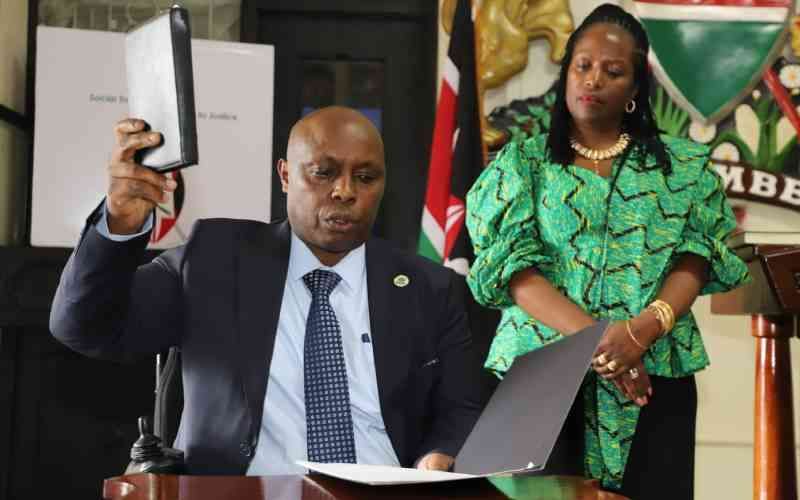
TSC CEO Cheptumo Ayabei Takes Office, Promises Fairness and Teacher Welfare

Director of Public Prosecutions Secures Arrest Warrant for Siaya Man Accused of Panga Attack