
General News
Roads in Kitutu, Colleges in South Mugirango, Rice and Beans in Nyaribari Chache: Is This MP Zaheer Jhanda’s Version of Development?

MP Zaheer Jhanda often presents himself as a committed supporter of the Kenya Kwanza and broad-based government.
On many occasions, he appears alongside national leaders and aligns publicly with President William Ruto.
Across Kisii County, he is not alone in that political stance. Two other MPs, Japhet Nyakundi of Kitutu Chache North and Sylvanus Osoro of South Mugirango, also stand firmly with the government. All three speak loudly in its defense.
However, when development is examined on the ground, the similarities appear to end there.

Government Access in Action Elsewhere
In Kitutu Chache North, the impact of government access is visible. For example, several roads have improved, with some upgraded to bitumen standards.
At the same time, schools have gained new classrooms, easing congestion for learners.
Moreover, bursary distribution in the area attracts fewer public complaints. While challenges still arise, residents can point to steady progress. As a result, government links appear to translate into tangible benefits.
South Mugirango Follows the Same Path
Similarly, South Mugirango shows a clear development pattern. Roads are more passable, and education infrastructure continues to grow.
Notably, discussions about starting colleges have already begun.
In addition, MP Sylvanus Osoro openly uses his national position to push opportunities for locals.
Consequently, many residents credit him for helping constituents secure jobs and access state programs.
A Different Reality in Nyaribari Chache
In contrast, Nyaribari Chache tells a different story. Many residents struggle to identify major development projects. Instead, poor roads remain common in several areas.
At the same time, schools report limited support. Students, meanwhile, continue to raise concerns about bursaries. For many families, the process feels uncertain and unreliable.

Nyaribari Chache MP Zaheer Jhanda handing out food supplies to residents during a public distribution exercise (Source: Facebook: Anjuh Orare)
Visibility Without Results
What stands out most to residents is not construction or policy wins. Rather, they notice frequent travel and social media posts. Updates from meetings appear regularly online.
Yet, despite this visibility, impact on the ground remains hard to see.
From Long-Term Projects to Food Parcels
Instead of large projects, the most visible intervention has been the distribution of rice and beans. Certainly, food support has value during emergencies.
However, residents question why relief has replaced development. Roads, classrooms, and bursaries provide lasting solutions. Food parcels, on the other hand, offer only short-term relief.
Questions Surrounding Disaster Food
Additionally, concerns have emerged about GOK disaster food. This support is widely understood to target regions facing severe hunger.
Therefore, many residents ask why such food appears in Nyaribari Chache. According to critics, the supplies are repackaged into smaller portions before distribution. To them, this looks more like political charity than planned development.
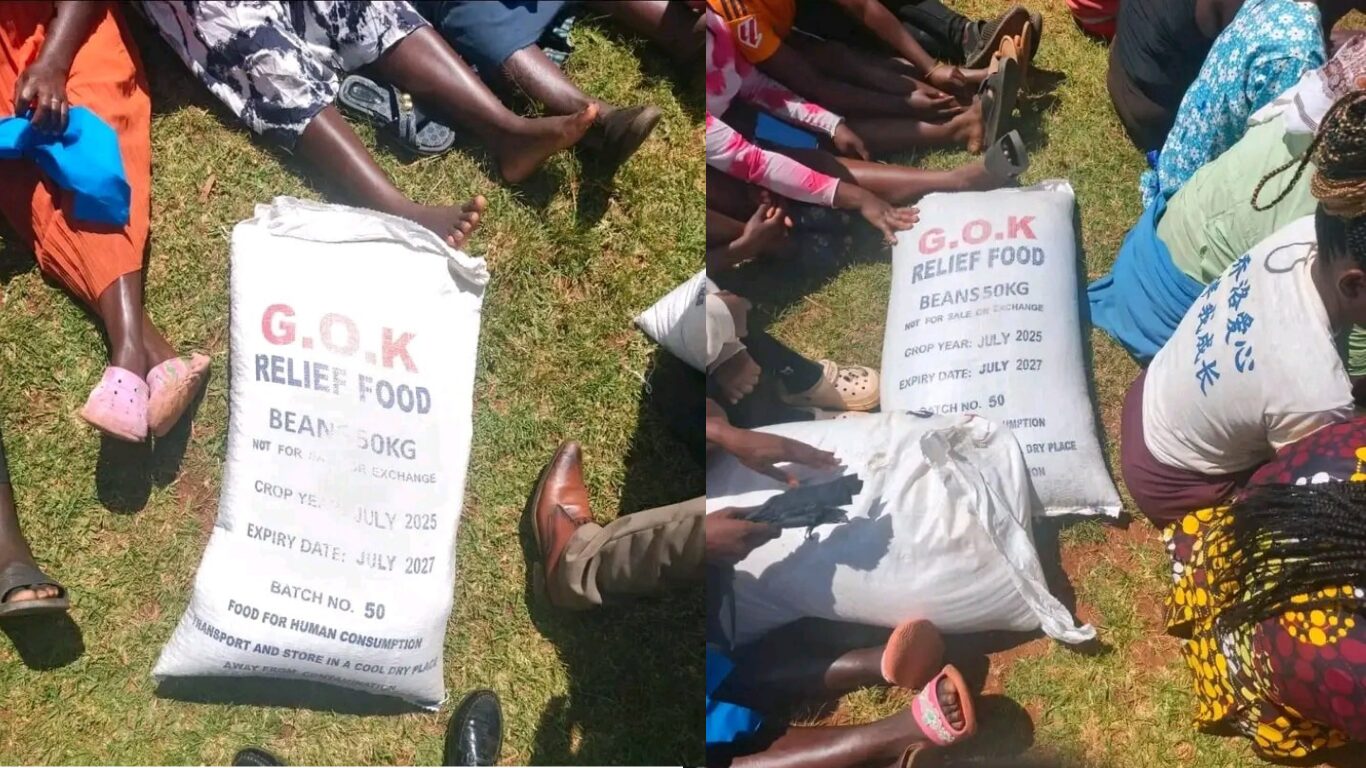
GOK disaster food being handed out to residents in Nyaribari Chache
When Accountability Meets Resistance
Meanwhile, some residents and students claim that questioning this approach attracts hostility. Instead of engagement, they say criticism is treated as disloyalty.
As a result, frustration continues to grow. Accountability, many argue, should strengthen leadership, not threaten it.
Same Government, Unequal Outcomes
Importantly, all three MPs operate under the same national government. They face similar economic pressures and policy limits.
Yet, outcomes differ sharply. While Kitutu Chache North and South Mugirango show progress, Nyaribari Chache lags behind. This contrast raises unavoidable questions.
Loyalty Versus Delivery
Supporting the government does not automatically deliver development. Likewise, attending meetings does not build roads. Posting photos does not fund education.
Instead, progress requires focus, follow-up, and persistence. Without these, alignment with power means little to ordinary citizens.
Growing Discontent on the Ground
Increasingly, voters who supported MP Zaheer Jhanda express disappointment. Students feel overlooked. Parents feel unheard. Consequently, trust continues to erode.
People are not demanding miracles. Rather, they want fairness and equal effort. They want what neighboring constituencies already enjoy.
The Question That Remains
If roads are possible in Kitutu and colleges are possible in South Mugirango, why does Nyaribari Chache receive food parcels?
Until that question is answered convincingly, claims of effective leadership will remain under scrutiny. In the end, development speaks louder than political loyalty.
And right now, the ground in Nyaribari Chache is speaking clearly.
Read More: GOK disaster food being handed out to residents in Nyaribari Chache
Comments


Benson Gethi The Man Behind the NYS Scandal: How the Gethi Family Profited from Billions Lost

Eldoret Airport Smuggling Expose: Millions Lost as Gadgets Flow Illegally to Ethiopia

How Ben Gethi Orchestrated the Ksh 6.2 Billion NYS Scandal the EACC Can No Longer Ignore

SportPesa Aviator Exposed: Why SportPesa Aviator Games Have Become a Public Danger That Kenya Can No Longer Ignore

SportyBet Kenya Bonus for January 2026 – Uncover Unique Offers!

The 2027 Expiry Date: Why Moses Omondi’s Term Will Be Short

The Two Faces of Opiyo Wandayi: The ‘Watcher’ Who Now Uses Luo Votes While Kenyans Pay the Price

EXPOSED: Court Filings Show How Cs Mbadi, Watanga and Nyawanda Approved Sh5.5 Billion Illegal Rice Imports

Paul Ndung’u Bankruptcy Exposes a Stunning Fall After SportPesa Court Defeat

Arsenal vs Manchester United Prediction: Betting Tips, Odds, and Match Preview

Securing Scholarships for International Study: A Comprehensive Guide for Students
Paul Ndung’u Bankruptcy Exposes a Stunning Fall After SportPesa Court Defeat
Arsenal vs Manchester United Prediction: Betting Tips, Odds, and Match Preview
EXPOSED: Court Filings Show How Cs Mbadi, Watanga and Nyawanda Approved Sh5.5 Billion Illegal Rice Imports
The 2027 Expiry Date: Why Moses Omondi’s Term Will Be Short
The Two Faces of Opiyo Wandayi: The ‘Watcher’ Who Now Uses Luo Votes While Kenyans Pay the Price
SportyBet Kenya Bonus for January 2026 – Uncover Unique Offers!
SportPesa Aviator Exposed: Why SportPesa Aviator Games Have Become a Public Danger That Kenya Can No Longer Ignore
How Ben Gethi Orchestrated the Ksh 6.2 Billion NYS Scandal the EACC Can No Longer Ignore
Eldoret Airport Smuggling Expose: Millions Lost as Gadgets Flow Illegally to Ethiopia
-
 Business News1 week ago
Benson Gethi The Man Behind the NYS Scandal: How the Gethi Family Profited from Billions Lost
-
 Business News1 week ago
Eldoret Airport Smuggling Expose: Millions Lost as Gadgets Flow Illegally to Ethiopia
-
 Columns And Opinions1 week ago
How Ben Gethi Orchestrated the Ksh 6.2 Billion NYS Scandal the EACC Can No Longer Ignore
-
 General News5 days ago
SportPesa Aviator Exposed: Why SportPesa Aviator Games Have Become a Public Danger That Kenya Can No Longer Ignore
-
 Entertainment5 days ago
SportyBet Kenya Bonus for January 2026 – Uncover Unique Offers!
-
 General News5 days ago
The 2027 Expiry Date: Why Moses Omondi’s Term Will Be Short
-
 Columns And Opinions5 days ago
The Two Faces of Opiyo Wandayi: The ‘Watcher’ Who Now Uses Luo Votes While Kenyans Pay the Price
-
 Columns And Opinions5 days ago
EXPOSED: Court Filings Show How Cs Mbadi, Watanga and Nyawanda Approved Sh5.5 Billion Illegal Rice Imports