
Politics
Influencers for Sale: Inside the Government’s Attempt to Control Public Opinion Through the Cyber Crimes Bill 2025

When truth fails to convince the public, propaganda becomes the government’s most powerful weapon. In Kenya, the state has found a new way to shape opinion and silence criticism by recruiting social media influencers to promote the controversial Computer Misuse and Cybercrimes (Amendment) Act, 2024.

The government is paying influencers to defend a law that threatens online freedom.
The Rise of Government-Endorsed Influencers
After facing massive rejection over the Finance Bill, the government appears to have adopted a different strategy. It is now relying on well-known media personalities and online figures to polish its image and defend questionable policies.
Influencers such as Alex Mwakideu, Willis Raburu, YY Comedian, Esther Musila, Oga Obinna, and Dr. King’ori have been prominently involved in campaigns promoting the Cyber Crimes Bill, presenting it as a tool to bring order to the digital space. However, their involvement has raised questions about credibility, motivation, and the manipulation of public discourse.
Behind the smiles and polished videos lies a calculated campaign funded and coordinated by state agencies to soften public opposition. It is alleged that these influencers have received payments and invitations to exclusive state functions through intermediaries close to the Office of the President.
Handouts Over Integrity
Many of the individuals driving the campaign have no background in law, policy, or governance. Their expertise lies in entertainment, not legislation. Some gained fame through radio, comedy, or beauty-driven online presence, yet they are now positioned as authorities on national policy.
This trend reflects a deeper problem: the substitution of integrity with influence. These figures have chosen short-term rewards over truth, turning their platforms into tools of manipulation. The same government that is unable to pay lecturers, doctors, or civil servants on time is now allegedly funding online personalities to shape narratives in its favor.
Judicial Intervention: The High Court Steps In
The controversial Computer Misuse and Cybercrimes (Amendment) Act, 2024, has already faced major legal resistance. On Monday, the Kerugoya High Court issued conservatory orders halting its implementation.
Justice Edward Muriithi, while ruling on a petition filed by Kirinyaga Woman Representative Jane Njeri Maina, suspended Section 6(1)(a) of the law for seven days pending further directions.
“The application seeking conservatory orders pending hearing of the petition for a declaration that the enactment of the Computer Misuse and Cybercrimes (Amendment) Act, 2025, without Senate involvement despite affecting county governments was unconstitutional, null and void, is certified urgent,” read part of the ruling.
The Law Society of Kenya (LSK) has also challenged the Act in court, describing it as a legal instrument designed to suppress free speech and shield government officials from public accountability.
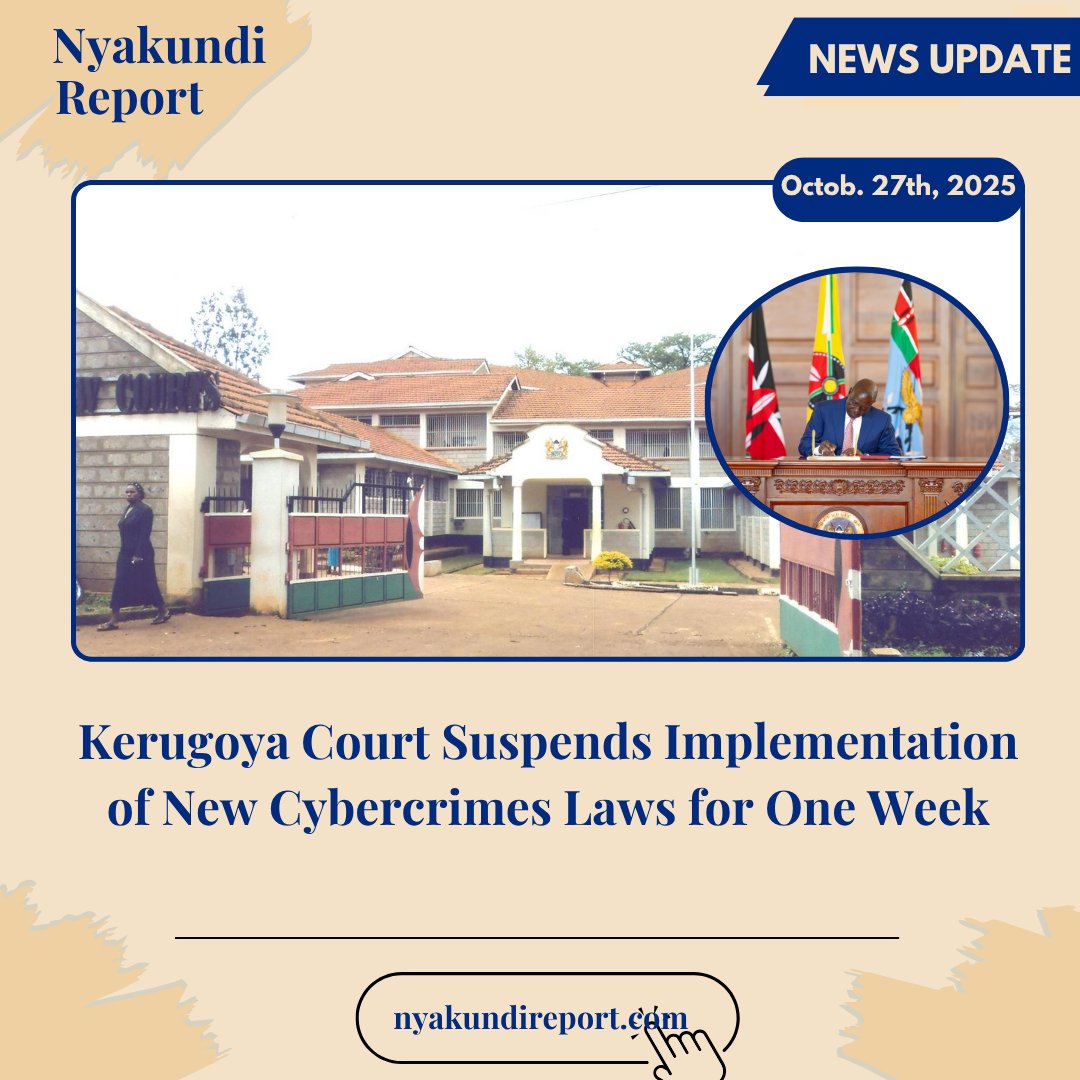
Kerugoya law courts suspend implementation of new cybercrime laws for one week (Nyakundi Report)
Celebrities Dining with Power
The situation has revealed a new kind of betrayal. The same celebrities and content creators who rose to prominence through public support now appear to be defending policies that threaten the very freedoms that built their careers.
While ordinary Kenyans continue to struggle with unemployment, high taxes, and limited access to education, the country’s social influencers are dining with those in power, selling narratives that favor the government’s agenda. In exchange for comfort, they have abandoned conscience.
When fame replaces principle, the public loses its true advocates. These influencers are not educating the masses; they are helping to market silence and justify state control over information.
The Bigger Picture
The government’s growing partnership with influencers is not an isolated event. It signals a broader strategy to control online spaces and minimize criticism. Rather than investing in transparency and accountability, the state is using entertainment and celebrity power to sanitize its image and distort truth.
This manipulation of public perception poses a serious threat to democracy. When information becomes propaganda, the line between truth and fiction disappears. The influencers being used today may not realize that once the law fully takes effect, it will not exempt them either.
The Question That Remains
When those with the loudest voices choose silence for a price, who will speak for the ordinary citizen?
Kenyans are watching closely. The same law that these influencers defend today could soon be used to censor them tomorrow. The courts have offered temporary relief, but the battle for digital freedom and accountability is far from over.
Read More: Why Mutahi Kahiga’s Remarks Might Be Part of President Ruto’s Larger Political Game
Comments


Allan Chesang Goons Brutally Attack Standard and K24 Journalists in Cherengany as Corruption Cover-Up Claims Deepen

How the DCI and Kisumu County Officials Shield the Medprime Training College Syndicate While Students Buy Worthless Certificates

How Interior PS Raymond Omollo and Senator Allan Chesang Ran a Sh60 Million Fake Tender Scam

The NSSF Audit Dossier on Mismanaged Billions and Stalled Housing Projects

The Absa Kenya Dossier on Extortion Cartels, Boardroom Purges, and the Million-Dollar Client Hunt

“Enough is Enough”: DP Kindiki Issues Stern Warning to Ruto Critics

Why CS Opiyo Wandayi is Losing the Siaya Power War to Governor Orengo
UDA Politician Arrested Over Sixty Million Shilling Fake Tender Scam at the Office of the President
National Youth Service Officially Launches 2026 Nationwide Recruitment Exercise for Kenyan Youth
