
General News
Nairobi Metropolitan Services allocated Sh26.4bn for post COVID-19 mitigation measures

NAIROBI, Kenya May 20 – Nairobi Metropolitan Services (NMS) has been allocated 26.4 billion shillings by the National Treasury days after Director General Major Mohammed Badi raised concerns.
The cash strapped Nairobi Metropolitan Services has been experiencing cash flow challenges after Governor Mike Sonko declined to assent to the Nairobi City County Supplementary Appropriation Bill 2020.
Sonko, who surrendered some of his four crucial functions to the Badi-led agency two months ago, referred the Bill back to the County Assembly on grounds that its passage did not conform to the provisions of the Public Finance Management Act and the County Government Act.
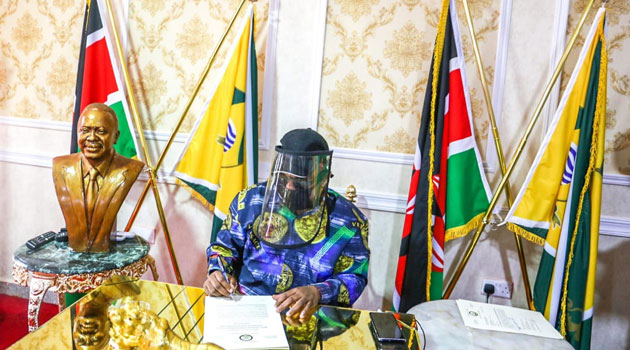
According to a letter addressed to the National Assembly by National Treasury Cabinet Secretary Ukur Yattani, the money is part of the Sh53.7 billion which President Uhuru Kenyatta had approved as part of the measures for post-COVID-19 economic stimulus package in the 2020/2021 financial year.
“The Head of Public Services submitted the Budget Estimates for Nairobi Metropolitan Services after our submission to Parliament. In this regard, we request for inclusion of NMS budget estimates in the National Government Budget under the presidency,” he said.
Mukuru Renewal Project initiated by NMS was allocated Sh1.5 billion.
Other funds requested by CS Yattani to be passed include Sh4.55 billion transfer of funds for the leasing of motor vehicles for the State Department for Interior to the National Treasury, Sh1.35 billion for enhancement of operation and maintenance and development budget under the presidency.
Others which are also included in the amendments are Sh2.55 billion under the State Department for Interior for operations and maintenance and development budget and Sh100 million for Kenya Financing Locally-led Climate Action Project under the National Treasury with the amount being foreign-financed.
CS Yattani said the amendments will be funded through a combination of budget realignment, additional funding from development partners and mopping of surpluses from the parastatals.
Comments

National Youth Service Officially Launches 2026 Nationwide Recruitment Exercise for Kenyan Youth
UDA Politician Arrested Over Sixty Million Shilling Fake Tender Scam at the Office of the President

Why CS Opiyo Wandayi is Losing the Siaya Power War to Governor Orengo
Why CS Opiyo Wandayi is Losing the Siaya Power War to Governor Orengo
UDA Politician Arrested Over Sixty Million Shilling Fake Tender Scam at the Office of the President
National Youth Service Officially Launches 2026 Nationwide Recruitment Exercise for Kenyan Youth

Xiaomi Unveils REDMI Note 15 Series: REDMI Titan Durability Meets Advanced Imaging

SportyBet’s 1UP Early Win Is a Game-Changer for Kenyan Punters in 2026

Evidence-Based Study Strategies for Academic Success in Higher Education

Securing Scholarships for International Study: A Comprehensive Guide for Students

Paul Ndung’u Bankruptcy Exposes a Stunning Fall After SportPesa Court Defeat

Arsenal vs Manchester United Prediction: Betting Tips, Odds, and Match Preview

EXPOSED: Court Filings Show How Cs Mbadi, Watanga and Nyawanda Approved Sh5.5 Billion Illegal Rice Imports
-
Jobs2 days ago
National Youth Service Officially Launches 2026 Nationwide Recruitment Exercise for Kenyan Youth
-
General News2 days ago
UDA Politician Arrested Over Sixty Million Shilling Fake Tender Scam at the Office of the President
-
 Politics4 hours ago
Why CS Opiyo Wandayi is Losing the Siaya Power War to Governor Orengo