General News
Germans to wear masks in shops as pandemic’s economic toll mounts » Capital News

[ad_1]
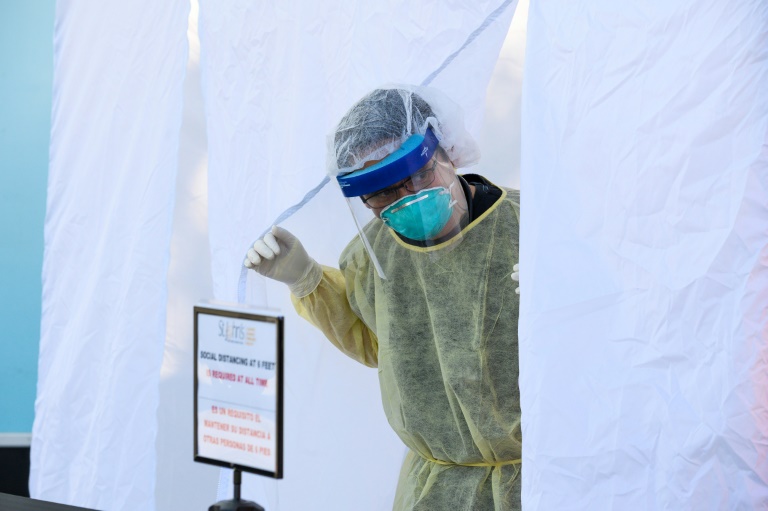
A nurse awaits his next patient at a mobile COVID-19 testing station in a public school parking area in Compton, California © AFP / Robyn Beck
Berlin, Germany, Apr 29 – European countries are working to find a balance in how far to ease coronavirus lockdowns, with Germany enforcing mandatory masks in all shops from Wednesday, as the crushing global economic cost of the pandemic becomes clearer.
Excitement over moves towards normality is being tempered by fear of fresh outbreaks of a disease that has already killed 214,000 people worldwide.

Snapshots of scenarios worldwide as some governments announce plans to relax strict coronavirus restrictions © AFP / Gal ROMA
Even a gradual return to everyday activity is “risky”, warned French Prime Minister Edouard Philippe, as he unveiled plans to gradually end the lockdown starting next month.
From Wednesday in Germany, masks will be needed to enter shops, which began to open last week after the government declared its outbreak under control.
Nose and mouth coverings are already compulsory on buses, trains and trams.
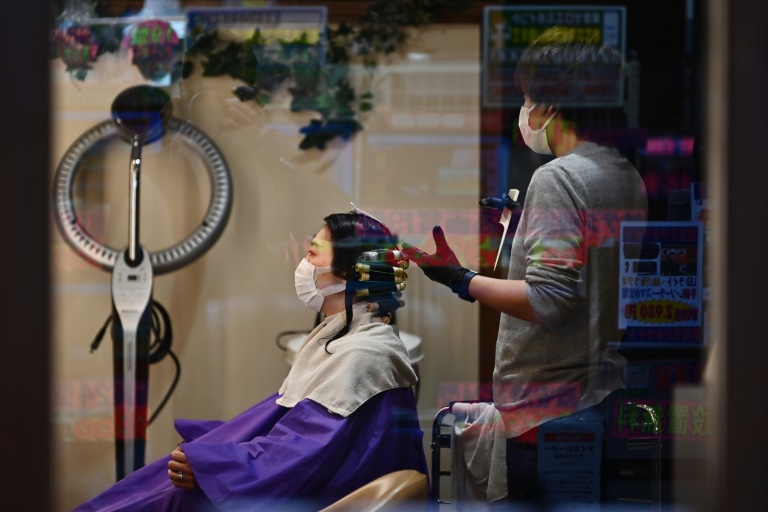
People wearing face masks visit a hair salon in Tokyo © AFP / CHARLY TRIBALLEAU
“We all need to take care that we don’t end up with more infections,” said Lothar Wieler, president of Berlin’s Robert Koch Institute.
Forecasts warn of the worst global recession in a century, with demand for goods gutted, and travel and tourism hammered.
British Airways became the latest airline to sound the alarm, saying it may have to cut its workforce by a third, while big banks are reporting deep falls in quarterly profit.

Lebanese demonstrators walk through the streets of the capital Beirut as anger over a spiralling economic crisis re-energised a months-old anti-government movement © AFP / ANWAR AMRO
In Lebanon there were more existential signs of economic crisis, with protesters confronting soldiers in defiance of a nationwide lockdown, complaining they could no longer feed their families.
And with warnings mounting of a meat shortage in the US, the White House said President Donald Trump would sign an executive order compelling meat-packing plants to stay open, despite a string of coronavirus deaths in the industry.
– ‘Cries of the people’ –
The United States has reported its millionth coronavirus case, and at over 58,000 the country’s COVID-19 death toll is by far the world’s highest — surpassing the number of Americans killed in the Vietnam war.

Health workers help a woman who tested positive for the novel coronavirus COVID-19, at Bagcilar in Istanbul © AFP / Bulent Kilic
Italy, Spain and France have been the worst affected European countries, with each reporting more than 23,000 deaths.
But daily tolls appear to be on a downward trend and they are all charting their way out of shutdown.
Nations from Russia to Nigeria also plan to ease lockdown measures, despite warnings from experts of a second wave of contagion if restrictions are lifted too hastily.
In Nigeria’s largest city Lagos, bus driver Taju Olonade told AFP the decision showed authorities had finally listened “to the cries of the people”.

A man wearing a face mask and his child observe a California Sea Lion at Berlin’s Zoo as it partially reopens for the public © AFP / Tobias SCHWARZ
“For almost one month I have not earned a penny,” he said. “I hope life will soon return to normal.”
More than three million people worldwide are known to have caught the respiratory disease that first emerged in China in December.

Inmates from Villa Devoto prison take part in a riot demanding measures to prevent the spread of the Covid-19 coronavirus, after a case was reported inside the detention center, in Buenos Aires © AFP / JUAN MABROMATA
China’s outbreak appears to be under control with no new deaths reported for two weeks straight and confirmed fatalities at around 4,600 — although doubt has been cast on the accuracy of these figures.
Chinese state media said Wednesday that the top legislature will next month hold its annual meeting, which had been postponed for the first time in decades due to the virus.
The rescheduled session on May 22 is a signal from the leadership that China has largely brought its outbreak under control, said Hong Kong-based analyst Willy Lam.
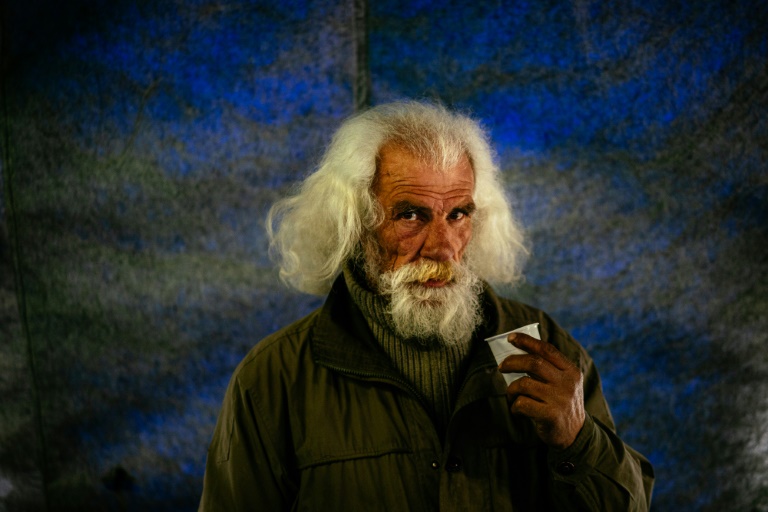
A homeless man in Moscow gets a meal at the “Rescue Hangar” during the COVID-19 coronavirus lockdown © AFP / Dimitar DILKOFF
“It’s a sign that China is back on its feet, and the economic machinery keeps humming, and a big reassurance to the people that the epidemic is over,” he told AFP.
– Sunseekers –
Scientists are scrambling to develop treatments and a vaccine, with myriad studies under way — including one from the US Department of Homeland Security into how ultraviolet radiation destroys the virus.
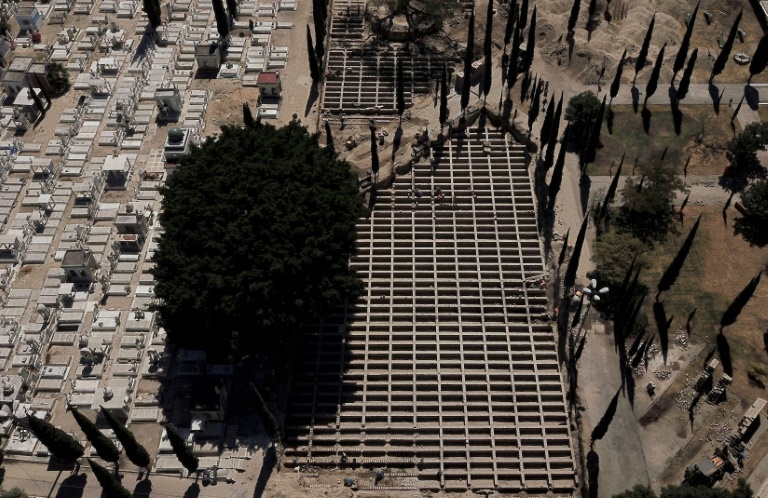
Workers build 700 graves at the Mezquitán Pantheon cemetery in preparation for possible victims of the novel COVID-19 coronavirus in Guadalajara, Mexico © AFP / ULISES RUIZ
While that research has not yet been published, people in Indonesia are soaking up rays in the hope that the tropical country’s plentiful sunshine will ward off the disease.

A man dressed as ‘Yamraj’, the Hindu mythical angel of death, campaigns to raise awareness on the importance to stay home and maintain social distancing during an event organised by Delhi police © AFP / SAJJAD HUSSAIN
“I always avoided the sun before because I didn’t want to get tanned,” said Theresia Rikke Astria, a 27-year-old housewife in Indonesia’s cultural capital Yogyakarta.
“But I’m hoping this will strengthen my immune system,” she added.
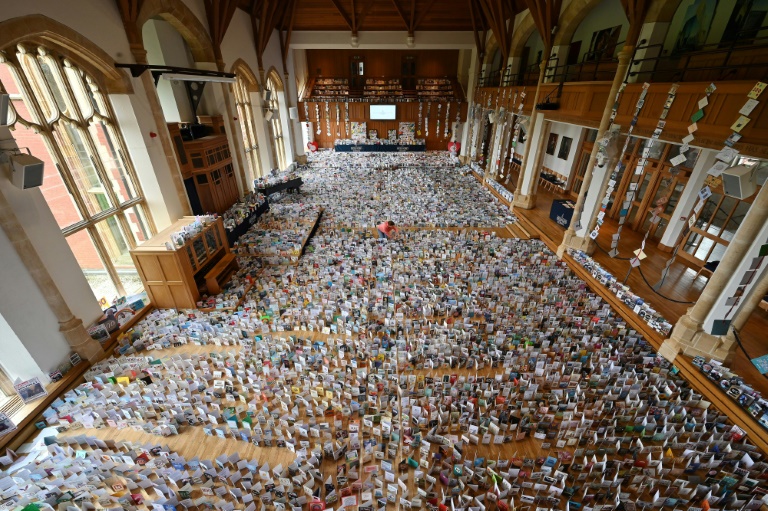
A selection of over 125,000 birthday cards sent to Captain Tom Moore, for his 100th birthday on April 30th, displayed in the Great Hall of Bedford School, in Bedford, north of London © AFP / JUSTIN TALLIS
Hundreds of New Yorkers were able to access walk-in virus and antibody tests for the first time on Tuesday, even without serious symptoms or underlying health issues.
Ariel Krupnik, 32, was among those willing to wait two hours for a $300 blood test.
Although the results are not 100 percent reliable — and even if it is not proven that antibodies confer total immunity — Krupnik said a positive result would mean feeling less compelled to stay inside all the time.
“I can go help out other people that are having it,” Krupnik said, as it would mean he might be able to donate blood for experimental plasma therapies.
Meanwhile Britain has issued a warning of coronavirus-related syndrome emerging in children — including abdominal pain and inflammation around the heart.
“What I would also stress is that it is rare. Although it is very significant for those children who do get it, the number of cases is small,” said Health Secretary Matt Hancock.
burs-kaf/hg
[ad_2]
Source link
Comments


Wantam Protests Hit Ugunja as CS Opiyo Wandayi Loses Support, Youths Invite DCP Led by Rigathi Gachagua

South Sudan at the Brink: How Corruption Tightens Its Grip on a Rare Working Institution

Chepterit Comes Alive During SportyBet Kenya Gifts Motorbike to Loyal Fans

Nest Lounge Narok Under Scrutiny as KRG The Don Shooting Incident Triggers Government Silence and Maasai Community Outcry

Why the Sh323.8 Billion Kenya US Health Agreement Is Raising Data Privacy Questions

Betty Bayo’s Mother Seeks DPP Inquest Over Daughter’s Death

Ugunja Women Cry Foul After MP Appointments Snub Them Despite Campaign Support

KSh4M Serve! SportyBet Kenya Title Sponsors for Kipchumba Karori Eldoret International Volleyball Tournament

Shadrack Maritim Resurfaces in Uganda After Two-Month Disappearance