Sports
WRC Safari Rally Safety Teams Hold Joint Training ahead of the showdown

[ad_1]
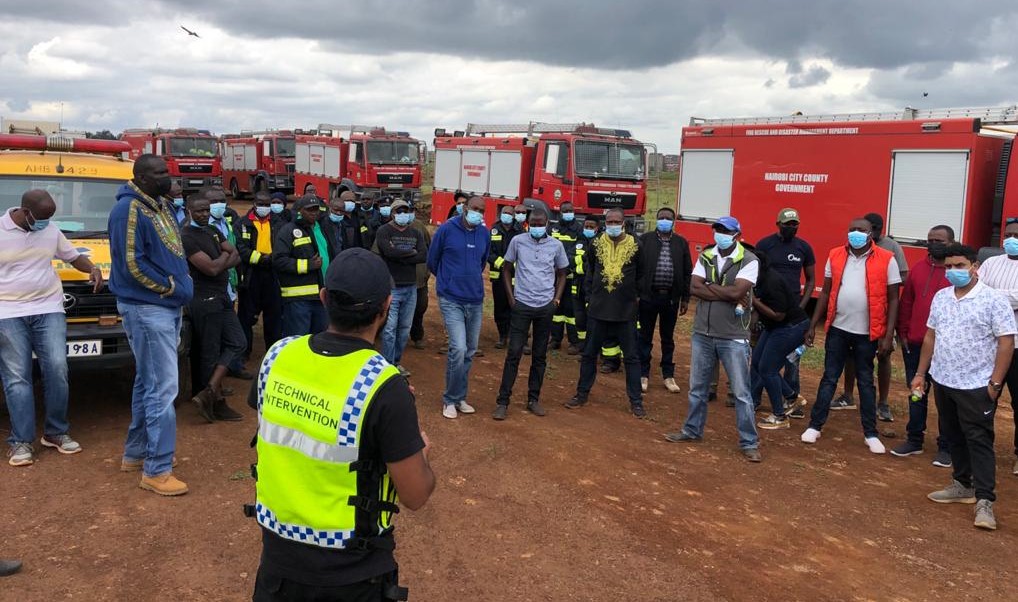
NAIROBI, Kenya, May 31 – In what is said to be the most indulging and comprehensive training, the different WRC Safari Rally Teams consisting of members of the Medical Intervention Vehicles (MIV), the Fire and Rescue, Marshalls and Technical Intervention vehicles (TVI) got together for a joint training.
The training started with a brief introduction from the Norris Ongalo the Chief of Safety and Dah Patel, the Head of TIV’s. The session was organized to introduce the teams to each other, explain each department their role and get them to work together to ensure that each know their roles as a unit. Speaking through a Zoom link from London, Rupert Hine took the different crews through the paces of handling the different tools that will be used by the TIV’s, from the cutters to the spreaders, body jacks and many other hydraulic recovery tools.
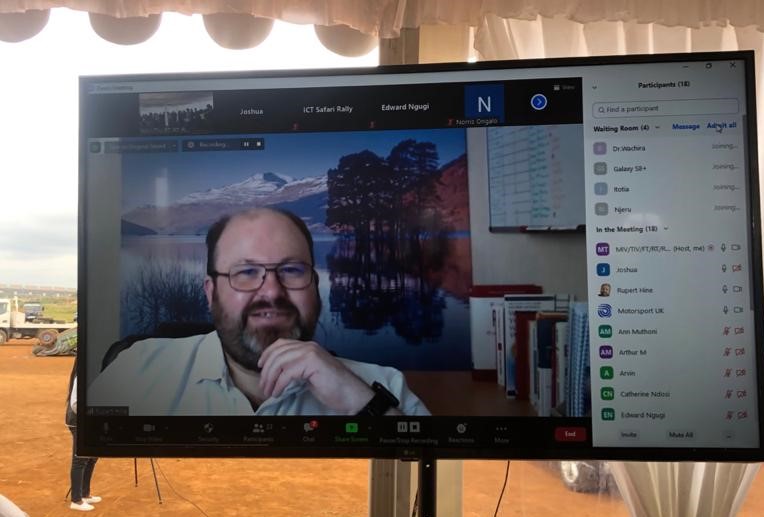
Rupert took the teams through the theoretical Practice clearly showing the way each team depended on another. The zoom presentation had short training videos to explain what he had taught and handed over to the Deputy Chief Medical officer; Dr. Karauri who took over the afternoon session that tested the teams’ comprehension of their respective roles.
Rupert took the teams through the “Safety Action plan” in the event of an accident. The first on scene is usually the Safety Marshal closest to the accident scene.
The Marshal informs the Radio Marshall of the accident which is passed on to Radio control who then go on to dispatch the Emergency Safety Team. The team can only act when given authorization from the Clerk of Course. Once deployed, the MIV leaves first with the medical team, followed by the TIV team.
Once on sight, the TIV team will secure the vehicle. This includes putting the car back on its four wheels and creating an access point for the extrication (Carefully and safely removed) This includes cutting the body frame of the vehicle to ensure that the driver and navigator can be attended to.
“Protocol has it that if the driver and navigator get out of the car if they can do so. This gives the medical team the assurance that they are fine,” Rupert said.
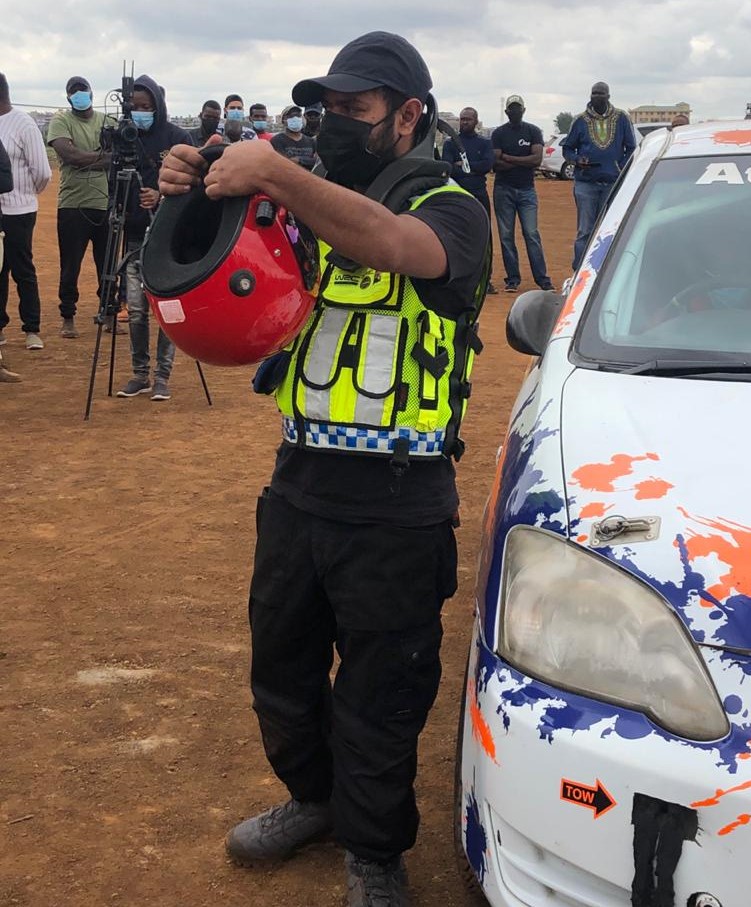
The second session was held by Dr. Karauri; the `deputy Chief Medical officer. He took the teams through what could easily be said to be the one of the most important aspects yet; extrication. Dr. Karauri and his team showed the teams gathered how to get a rally driver or navigator out of the car in under 15 seconds. It was a sight to behold, the team was swift and seemed very comfortable when many would be losing their mind.
The afternoon session saw the Fire team learn how to use the four-wheel drive teams in their Fire Trucks. Manish Kerai; the Deputy in charge of the TIV Showed the Nairobi Fire Teams how to navigate muddy routes as experienced during the ‘ARC Equator Rally.’
The fire team took the team through basic fire fighting tips. They lit a few tires on fire and showed the teams how to put it out effectively using Powder fire extinguishers. Case in point being most of the fires that the team encounter will be electrical and powder is best suited to handle such fires. The fire trucks also have foam, soapy water and plain water.
The last session of the day was for the TIV’s to have a refresher course on how to flip a vehicle back on all four wheels. Dr. Paul Mbugua along with Dash, showed how to use a winch to flip a car back onto its four wheels.
The session closed after a small mud challenge for the TIV to test their effective knowledge of the low and high ratio gears, diff lock, D-shackles.
Capital FM’s Suleiman Munyua AKA Soulo showed them the capabilities of the Landcruiser 80 series in sticky Black cotton soil …Wilson Munene too steered his Range Rover P38 through the sticky patch proving that sometimes it’s not what you drive, but how you drive it.
The next joint training sessions will be held in Naivasha after the teams are deployed on the 19th of June ahead of the WRC Safari Rally on the 24th through to the 27th of June.
The teams will do their individual trainings as they horn and sharpen their skills ahead of the rally.
After 19 years of being off the WRC calendar, this looks like it’s going to be one spectacular rally that will put Kenya on the Map; not just for her beauty; but for the spectacularly held event that will give the drivers a test of their skills, their cars and their ability to react and adapt to whatever the rally routes throws at them.
[ad_2]
Source link
Comments


Infinix Ignite Kenya Varsity Showdown With $1,000 Prize as PUBG Mobile Targets Campus Gamers

Bet With Discipline. Cash Out With Precision: How to Play SportyBet Aviator Missions in Kenya
Bet With Discipline. Cash Out With Precision: How to Play SportyBet Aviator Missions in Kenya
Infinix Ignite Kenya Varsity Showdown With $1,000 Prize as PUBG Mobile Targets Campus Gamers

SportyBet Powers Vurugu 2 — Nairobi’s Biggest Celebrity Fight Night Lands at Sarit Expo Center on 20 June 2026

Allan Chesang Goons Brutally Attack Standard and K24 Journalists in Cherengany as Corruption Cover-Up Claims Deepen

How the DCI and Kisumu County Officials Shield the Medprime Training College Syndicate While Students Buy Worthless Certificates

How Interior PS Raymond Omollo and Senator Allan Chesang Ran a Sh60 Million Fake Tender Scam

The NSSF Audit Dossier on Mismanaged Billions and Stalled Housing Projects

The Absa Kenya Dossier on Extortion Cartels, Boardroom Purges, and the Million-Dollar Client Hunt

“Enough is Enough”: DP Kindiki Issues Stern Warning to Ruto Critics