General News
Kenya: Raila Campaign Officially Kicks Off With Azimio

[ad_1]
It had been the worst kept secret in Kenya. The one about Raila Odinga being in the presidential race next year. All the preceding talk that he was mulling over the matter but had not made any decision prior to the December 10 announcement was calculated strategic suspense. Who doubted a second that the decision to run had been made long before?
Finally it is official: Raila is a presidential candidate for 2022. Friday also marked the formal launch of what he called the Azimio la Umoja movement, with a 10-point programme that will form the gist of his campaign manifesto. (The healthcare bit he baptised “Babacare”. I can bet it will become a popular catchphrase).
The man knows how to make a splash. Start with the triumphal motorcade across Nairobi from his Karen residence to Kasarani stadium.
The mood was that of an actual swearing-in ceremony. Prayers were followed by speeches from representatives from the mosaic of Kenya’s communities. Then the recorded homilies delivered in all the regions across the country where the Azimio la Umoja crusade was taken to. It was a jamboree.
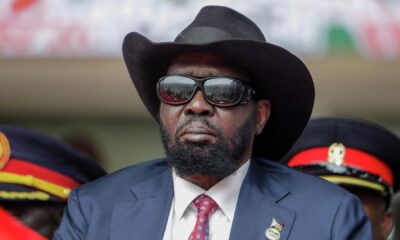
Present was a brigade of Cabinet secretaries, CASs, PSs, governors and MPs. From the One Kenya Alliance, Kanu’s Gideon Moi was there. Musalia Mudavadi and Moses Wetang’ula declined invitations to attend. Kalonzo Musyoka was in South Sudan to meet President Salva Kiir.
Friday’s event was the culmination of what started with the famous Handshake in March 2018. That was a political truce. And the closure of an historic post-Independence feud that cut into two prominent families and spilled over to their two, major, communities. In no small measure, this has shaped the politics of Kenya ever since.
The mending of fences marked a new beginning where Raila became part of President Uhuru Kenyatta’s circle, a trusted confidante and – whoa! – his apparent choice of successor.
Raila’s political struggles
Raila has made four previous stabs at the presidency. The first, in 1997, was a reflexive effort that seemed designed, first, to cement his primacy in the Luo nation and, second, to signal that the Luo were a major community in this country that had to be reckoned with in the presidential stakes.
The other three races were very serious affairs, with the 2007 one ending in a virtual dead heat with the incumbent, Mwai Kibaki. Many analysts actually think Raila may have won that one. It has been a lifelong struggle for Raila in pushing for change in Kenya. It has taken painful personal sacrifices, including a cumulative nine years in detention. At another level, his struggle has been to win inclusion for his people after decades of perceived marginalisation.
The twists and turns of his political life, be it getting implicated in the 1982 coup attempt, or his short-lived alliance with Daniel arap Moi’s Kanu in the late 90s, to his presidential campaigns, all form a thread in this struggle. The ethnicised bile that we daily see on social media and on political platforms targeting his person and – yes – the Luo community are indicators that this struggle is far from over. You have heard them: “Watu wa kung’oa reli”, “Azimio la Mawe”… The vulgar load of them.
Age has mellowed the once implacable oppositionist. I believe he is a better and wiser leader for it. He says his Azimio call is to build bridges across the nation. So be it. Compared to certain others, his temperament alone is reassuring. No unsettling displays of anger at public rallies. No unprovoked attacks at governors who don’t support him.
Overall, he cuts a less divisive figure when contrasted with his younger, abrasive chief opponent. Alongside integrity issues, this could turn out to be one of the most crucial considerations in the 2022 presidential contest.
Raila starts the race with two clear advantages. One is the undeniable support of the state. This brings him a whole machinery and resources he never had in his past campaigns.
The second is Raila’s growing acceptance in the single largest population bloc in the country – the Mt Kenya region. Hitherto, he had been an impossible sell there, essentially because he was contesting against prominent sons of the region: Kibaki in 2007 and Uhuru in 2013 and 2017.
Railaphobia fast fading
This time round, things have changed. Railaphobia is fast fading. His Mt Kenya rallies have been powerful. Plus the elite business club from the region, the Mt Kenya Foundation, has embraced him wholeheartedly.
Above all, Raila through his extended political activity and manoeuvrings has grown to understand this country’s different factions and ethnic interests – and their complex faultlines – better than before.

Sign up for free AllAfrica Newsletters
Get the latest in African news delivered straight to your inbox
The Azimio outreach to the regions sought to directly engage with these. The way he frames his interactions with different communities and social groups shows the way his politics has changed.
He demonstrated that well in his keynote Azimio address on Friday. Rather than thinking he can ride roughshod over everybody, he wants to embrace all “partners” who are ready to join him. And not just Jubilee, but also other regional players and parties. These will form the political coalition to be crafted as part of the Azimio movement. The coalition is billed to be a ‘Big Tent’ formation.
Should the President endorse Raila?
The question is academic. The state’s engagement with him in the days leading to the Azimio declaration all but affirms where Uhuru’s preference lies.
The President called off Jubilee’s national delegates convention so that the Azimio one could be held first. The issue now is more of timing before the overt, definitive endorsement comes. When the Azimio coalition coalesces and takes final shape, I believe that is when Uhuru will speak his mind.
Gitau Warigi writes a weekly column for the Sunday Nation.
[ad_2]
Source link
Comments


South Sudan at the Brink: How Corruption Tightens Its Grip on a Rare Working Institution

Wantam Protests Hit Ugunja as CS Opiyo Wandayi Loses Support, Youths Invite DCP Led by Rigathi Gachagua
Wantam Protests Hit Ugunja as CS Opiyo Wandayi Loses Support, Youths Invite DCP Led by Rigathi Gachagua
South Sudan at the Brink: How Corruption Tightens Its Grip on a Rare Working Institution

Chepterit Comes Alive During SportyBet Kenya Gifts Motorbike to Loyal Fans

Nest Lounge Narok Under Scrutiny as KRG The Don Shooting Incident Triggers Government Silence and Maasai Community Outcry

Why the Sh323.8 Billion Kenya US Health Agreement Is Raising Data Privacy Questions

Betty Bayo’s Mother Seeks DPP Inquest Over Daughter’s Death

Ugunja Women Cry Foul After MP Appointments Snub Them Despite Campaign Support

KSh4M Serve! SportyBet Kenya Title Sponsors for Kipchumba Karori Eldoret International Volleyball Tournament

Shadrack Maritim Resurfaces in Uganda After Two-Month Disappearance