
Sports
Kenya’s Deaflympics camp forges ahead with meticulous preparations

[ad_1]
NAIROBI, Kenya, Apr 16 – With barely a fortnight before the southern Brazilian town of Caxias do Sul plays host to the 2022 Deaflympics, the Kenyan contingent at the Moi International Sports Center Kasarani is leaving nothing to chance.
And in a bid to keep its athletes in good nick, officials have been putting two and two together to ensure that all facets of the team’s training are tiptop well in time.
Team Kenya’s CEO Sylvia Kamau is optimistic about Kenya’s prospects in Brazil; adding that all the effort and grit will not be in vain.
“Standards have now been set and only the sky is the limit,” Kamau quipped, adding: “The teams are more than ready for the gigantic task ahead in Brazil.”

Kenya will field men’s and women’s teams in Basketball and Handball as well as golf and athletics.
The golf team is composed of three players among them the 2020 Kenya Amateur Matchplay Champion Isaac Makokha.
Previously, before the team players joined camp, they have been training on their own.
–Government Support–

But the Government did take the whole team from April 1 and put it in residential training at the Kasarani hostels where all facilitates have been extended to the players and officials.
Kamau went on: “I can say at this juncture that the camp has been very productive. We have been able to control the health facet in it, and indeed the aspect of nutrition. We have doctors working round the clock.”
“We have a team of about 15 doctors who are taking care of the of the athletes; with a combination of both medical doctors and physiotherapists. We have nutritionists, psychologists and a nurse on board. So, we do have a comprehensive team that is taking care of the athletes.”
–Safe Space for athletes–
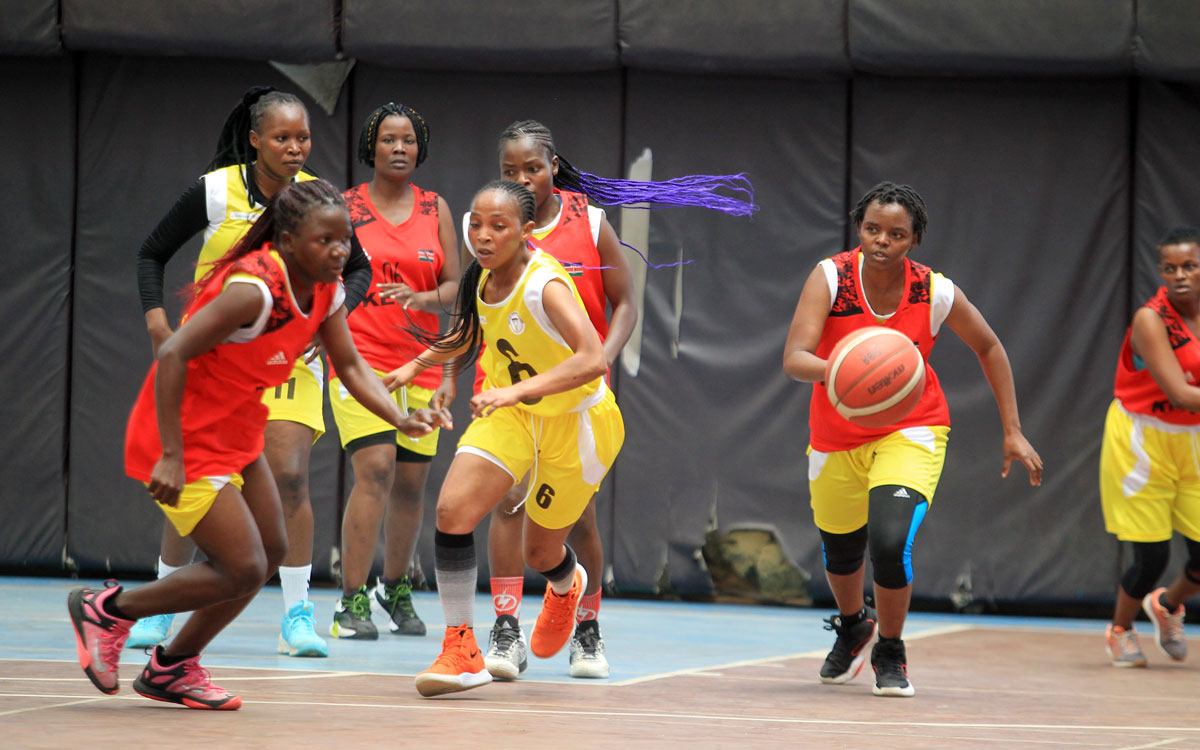
Kamau says priority in camp is the athlete, who is the most important for the team.
“We needed them to be in a safe space, in a place where they are settled
so that by the time they will approach the Games, they are thinking nothing more but the competition.”
“When you talk to the athlete and walk around in camp, they’re happy.”
In terms of logistics, Kamau is glad that the Government, through the Ministry of Sports, has really come through in terms of assistance.
“As from before we had complaints. But this time round all is well, and the team is raring to go. Deaflympics is now fully funded by the Government.

They are getting their training kit, equipment and allowances and now we are into the final phase where we are preparing the team for departure.”
Kasarani has been a beehive of activity. There are many things happening as officials try to put final touches to their preparations.
“We have applied for visas which we are anticipating getting in due course. We are doing the planning, and in a nutshell, we anticipate having the first group of athletes and officials leave on 20th of April,” she explained.
The second batch of athletes are expected leave April 23.
This will give the team almost eight days before the first competition gets underway.
–Early Football Kick-off–

Soccer is playing before the opening ceremony and has a fixture April 30.
So, they will have to leave April 20 and arrive there on 21st because the flight is quite long, they’ll have approximately 9 to 10 days to acclimatize into training.
Kamau: “We hope they will bring us medals given the level of support that have received so far.”
“I would like to speak a bit on the soccer team. It’s the youngest team we have in the contingent that’s going. It’s made predominantly of girls between 17 and 20 years of age but these are the best athletes.”
The selection of the soccer team happened across the country, but selectors mainly went into areas that are not traditionally sporting places.
“Though when you talk about soccer, Western is traditionally a soccer environment, but you would have imagined that the bulk of players would have come from Nairobi, Mombasa or Nakuru. The bulk of the team is from Western and schools around there so it’s the youngest team and our baby so to speak and we expect that they will perform well.”
–Advance Party—

In order to have a clue of what to expect in Brazil a team of officials went for a pre site visit earlier in the month led by our chair of the Deaflympics Committee Josephine Onunga.
Miriam Opondo (Chief Liaison Officer) and Tom Okiki (Chef de Mission) They were also part of the contingent that visited Brazil.
The general idea why they went was purely for preparation.
“One, we needed to see where we are sleeping. We have never been to Brazil before we didn’t want surprises. When we land there with a contingent of about 200 athletes and we are not sure what’s the grounds looks like; so, we really had to have a glimpse of what to expect.”
“Secondly, we needed to check out the facilities. And as you all know this is a special group and we needed to see that the facilities are prepared to enable competitions to go on well and for the athletes to be comfortable.”

“Thirdly, was to meet the International Committee of Sports for the Deaf (ICSD) team and the Brazilian Local Organising Committee (LOC) so we can see how the team can be hosted in Brazil.”
“I didn’t go to Brazil due to prior commitments, but they also discussed medical facilities, access meals, security and the visa issue.”
After the site visit officials believe it will be a smooth running on departure.
Opondo says the advance team inspected competitors’ grounds to ensure that players will be in a comfortable space.

“We checked the basketball courts as well as all the venues and we’re content with the situation on the ground. We also investigated matters communication because we have intentional sign and that many of our players may not understand.”
“We wanted to establish the fact that the communication facet that will occur in Brazil will be friendlier to the athlete. We also checked the communication at the hospital just in case they’re hospitalized. We wanted to see that they do have the accommodation, so we exhausted our long checklist.”
[ad_2]
Source link
Comments


South Sudan at the Brink: How Corruption Tightens Its Grip on a Rare Working Institution

Nest Lounge Narok Under Scrutiny as KRG The Don Shooting Incident Triggers Government Silence and Maasai Community Outcry

Chepterit Comes Alive During SportyBet Kenya Gifts Motorbike to Loyal Fans

Wantam Protests Hit Ugunja as CS Opiyo Wandayi Loses Support, Youths Invite DCP Led by Rigathi Gachagua
Wantam Protests Hit Ugunja as CS Opiyo Wandayi Loses Support, Youths Invite DCP Led by Rigathi Gachagua
South Sudan at the Brink: How Corruption Tightens Its Grip on a Rare Working Institution
Chepterit Comes Alive During SportyBet Kenya Gifts Motorbike to Loyal Fans
Nest Lounge Narok Under Scrutiny as KRG The Don Shooting Incident Triggers Government Silence and Maasai Community Outcry

Why the Sh323.8 Billion Kenya US Health Agreement Is Raising Data Privacy Questions

Betty Bayo’s Mother Seeks DPP Inquest Over Daughter’s Death

Ugunja Women Cry Foul After MP Appointments Snub Them Despite Campaign Support

KSh4M Serve! SportyBet Kenya Title Sponsors for Kipchumba Karori Eldoret International Volleyball Tournament

Shadrack Maritim Resurfaces in Uganda After Two-Month Disappearance

Lilian Akinyi Akech: A Trailblazer Redefining Leadership in Ugunja
-
 General News1 day ago
South Sudan at the Brink: How Corruption Tightens Its Grip on a Rare Working Institution
-
 Business News7 days ago
Nest Lounge Narok Under Scrutiny as KRG The Don Shooting Incident Triggers Government Silence and Maasai Community Outcry
-
 Entertainment5 days ago
Chepterit Comes Alive During SportyBet Kenya Gifts Motorbike to Loyal Fans
-
 General News1 day ago
Wantam Protests Hit Ugunja as CS Opiyo Wandayi Loses Support, Youths Invite DCP Led by Rigathi Gachagua