
Business News
Mortgage firm HF Group to sell its iconic headquarters

[ad_1]
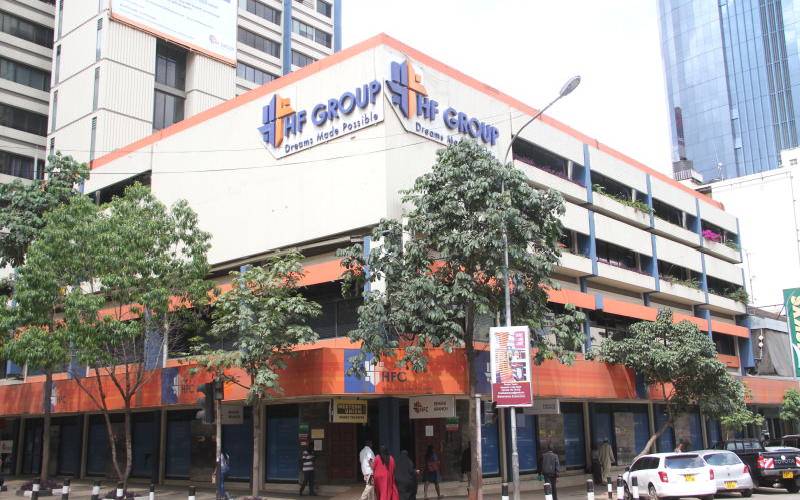
Housing Finance Group is planning to sell its headquarters in Nairobi’s central business district by June to raise capital that will help it comply with regulatory requirements.
The 13-storey building occupies a prime location at the junction of Kenyatta Avenue and Koinange Street.
By the end of December 2020, Housing Finance had breached some of Central Bank of Kenya’s (CBK) key requirements and also loan repayment obligations.
The company has appointed a transactional advisor to “scout for potential investors” who will boost its capital positions owing to losses by bank subsidiary Housing Finance Corporation (HFC).
HFC, Kenya’s premier mortgage lender, is currently diversifying into retail banking from being solely a property development firm, which it says will pull it out of the loss-making territory.
Last year, the firm’s net loss widened to Sh1.7 billion, a staggering increase of 1,450 per cent.
Its liquidity ratio fell below CBK’s requirement for some time last year but stood at 20.9 per cent at the end of the year, slightly above the CBK’s minimum of 20 per cent.
HFC in 2020 collected Sh11.8 billion from its loan book, down from Sh15 billion in 2019, which was used to boost the cash flow and other obligations.
Take a quick survey and help us improve our website!
In its recently released annual report and audited financial statements for the year ended December 2020, the group said a robust debt collection was in place, as well as a turnaround strategy into mainstream banking.
“There will be substantial upside on the liquidity position,” the company said.
It also said the bank held Sh7.1 billion worth of investments in Treasury bills and bonds.
“These investments are actively traded in the NSE and can be liquidated on short notice to cover for liquidity needs.”
Housing Finance Group said that in the last two years, it had met debt obligations of Sh8 billion, which had affected liquidity, and also had a tough year owing to the Covid-19 pandemic.
Other regulatory requirements breached include the statutory core capital and total capital ratios which were at 7.83 per cent and 9.08 per cent respectively.
CBK requirement for statutory core capital is a minimum 10.8 per cent and for the total capital ratio at 14.5 per cent.
CBK did not issue any fines and HFC said it had engaged the industry regulator on the breaches and the actions to correct.
“The bank has shared a time-bound action plan on how and when each breach will be cured,” the annual report said.
In February, Britam, HF Group’s majority shareholder, injected Sh1 billion into the company that will help it boost the capital ratio.
The bank is also in talks with one of its lenders to convert a loan balance into tier-two capital by October.
The financials said that a “significant shareholder of the group” had committed business support for a year.
Traditionally, HF has been a mortgage lender with a property development arm, but the company is now looking to diversify into retail banking.
In an interview with Financial Standard in December, Chief Executive Robert Kibaara said the mortgage and property development units started running into headwinds early last year as the property slump took hold.
Most of the projects they had financed were also doing badly and this necessitated a change of strategy.
“We said we are going to exit property development and by this, we mean not getting directly involved in any new projects,” said Mr Kibaara.
“We decided because the bank was solely dependent on a single sector, we needed to diversify into a full-service bank.”
HF Group’s high exposure to the property sector slump had left them vulnerable amid high defaults and non-performing loans in the construction sector.
[ad_2]
Source link
Comments


South Sudan at the Brink: How Corruption Tightens Its Grip on a Rare Working Institution

Nest Lounge Narok Under Scrutiny as KRG The Don Shooting Incident Triggers Government Silence and Maasai Community Outcry

Chepterit Comes Alive During SportyBet Kenya Gifts Motorbike to Loyal Fans

Wantam Protests Hit Ugunja as CS Opiyo Wandayi Loses Support, Youths Invite DCP Led by Rigathi Gachagua
Wantam Protests Hit Ugunja as CS Opiyo Wandayi Loses Support, Youths Invite DCP Led by Rigathi Gachagua
South Sudan at the Brink: How Corruption Tightens Its Grip on a Rare Working Institution
Chepterit Comes Alive During SportyBet Kenya Gifts Motorbike to Loyal Fans
Nest Lounge Narok Under Scrutiny as KRG The Don Shooting Incident Triggers Government Silence and Maasai Community Outcry

Why the Sh323.8 Billion Kenya US Health Agreement Is Raising Data Privacy Questions

Betty Bayo’s Mother Seeks DPP Inquest Over Daughter’s Death

Ugunja Women Cry Foul After MP Appointments Snub Them Despite Campaign Support

KSh4M Serve! SportyBet Kenya Title Sponsors for Kipchumba Karori Eldoret International Volleyball Tournament

Shadrack Maritim Resurfaces in Uganda After Two-Month Disappearance

Lilian Akinyi Akech: A Trailblazer Redefining Leadership in Ugunja
-
 General News1 day ago
South Sudan at the Brink: How Corruption Tightens Its Grip on a Rare Working Institution
-
 Business News7 days ago
Nest Lounge Narok Under Scrutiny as KRG The Don Shooting Incident Triggers Government Silence and Maasai Community Outcry
-
 Entertainment5 days ago
Chepterit Comes Alive During SportyBet Kenya Gifts Motorbike to Loyal Fans
-
 General News1 day ago
Wantam Protests Hit Ugunja as CS Opiyo Wandayi Loses Support, Youths Invite DCP Led by Rigathi Gachagua