
Business News
Ugly side of compulsory land acquisition deals south of Lokichar Basin

[ad_1]
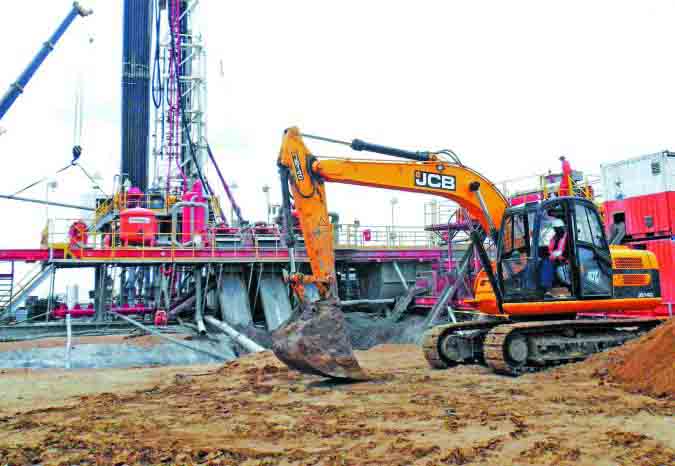
An oil rig used in drilling at the Ngamia-1 well in the Lokichar basin [Courtesy]
The proliferation of extractives and the anticipated mega infrastructural projects in the south Lokichar Basin in Turkana County provokes emotive conversations about the compulsory acquisition of private property.
This is especially so for pastoralists’ land, security of tenure in communal territories and competing notions of the beneficiaries of development.
In a recent visit to Turkana, the communities living south of the Lokichar oil basin said their land had become the new battleground for ownership, recounting the events since the seismic studies and oil exploration activities began.
Tracts of community land along the basin have been acquired for exploration of more than 40 oil fields, to install well pads, develop campsites and associated infrastructure.
These exploration activities have led to dispossession and displacement and loss of livelihoods as well as disruption of socio-cultural heritage through the closed out ancestral areas, graveyards, old wells, key migratory routes and grazing areas which have been alienated to pave the way for the projects.
The process of land acquisition and ensuing compensation has been marred with irregularities.
Communities adjacent to the project areas in Lochakula, Lopii and Lokwamusing confirm that they were locked out of land-related decision making and benefit-sharing talks, contrary to the Land Act No. 6 of 2012 and the Community Land Act No. 27 of 2016.
The interviews conducted with affected communities reveal that a few individuals appear to have been co-opted and manipulated to give the social licence for operations without just compensation.
The anticipated large-scale land acquisition for additional oil exploration, drilling activities and the planned components of the Lamu Port and Lamu?Southern Sudan?Ethiopia (Lapsset) corridor project traversing the region continue to ignite tensions.
This is being manifested through emerging socio-political struggles over land access and ownership and benefit-sharing.
Investors’ increased acquisition of land squeezes grazing areas and heightens the multi-faceted crises of natural resource depletion and violent conflicts.
The communities in Lochakula, Lopii Kakulit, Lokwamusing, Kaaruko, Kakong and Lokori indicated they had become victims of frequent banditry attacks, fuelled by land, minerals and oil interests.
Compulsory land acquisition is arguably a necessary evil, but the impacts on communities are detrimental when we overlook essential constitutional requirements.
-The writer is a research officer at Natural Justice
[ad_2]
Source link
Comments


South Sudan at the Brink: How Corruption Tightens Its Grip on a Rare Working Institution

Chepterit Comes Alive During SportyBet Kenya Gifts Motorbike to Loyal Fans

Wantam Protests Hit Ugunja as CS Opiyo Wandayi Loses Support, Youths Invite DCP Led by Rigathi Gachagua
Wantam Protests Hit Ugunja as CS Opiyo Wandayi Loses Support, Youths Invite DCP Led by Rigathi Gachagua
South Sudan at the Brink: How Corruption Tightens Its Grip on a Rare Working Institution
Chepterit Comes Alive During SportyBet Kenya Gifts Motorbike to Loyal Fans

Nest Lounge Narok Under Scrutiny as KRG The Don Shooting Incident Triggers Government Silence and Maasai Community Outcry

Why the Sh323.8 Billion Kenya US Health Agreement Is Raising Data Privacy Questions

Betty Bayo’s Mother Seeks DPP Inquest Over Daughter’s Death

Ugunja Women Cry Foul After MP Appointments Snub Them Despite Campaign Support

KSh4M Serve! SportyBet Kenya Title Sponsors for Kipchumba Karori Eldoret International Volleyball Tournament

Shadrack Maritim Resurfaces in Uganda After Two-Month Disappearance

Lilian Akinyi Akech: A Trailblazer Redefining Leadership in Ugunja
-
 General News5 days ago
South Sudan at the Brink: How Corruption Tightens Its Grip on a Rare Working Institution
-
 Entertainment1 week ago
Chepterit Comes Alive During SportyBet Kenya Gifts Motorbike to Loyal Fans
-
 General News5 days ago
Wantam Protests Hit Ugunja as CS Opiyo Wandayi Loses Support, Youths Invite DCP Led by Rigathi Gachagua