General News
Venezuela’s inflation-battered bolivar loses 6 zeroes » Capital News

[ad_1]
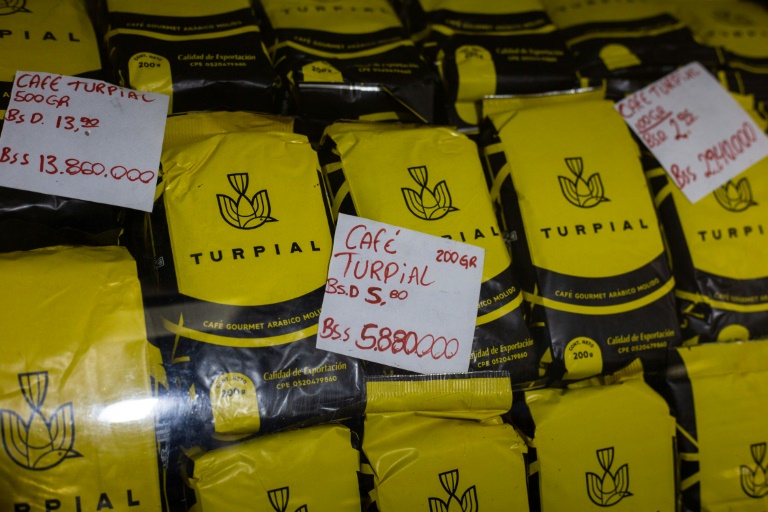
Coffee in a Caracas shop with its pre- and post-conversion price © AFP / CRISTIAN HERNANDEZ
Caracas (AFP), Oct 1 – The official exchange rate of the Venezuelan bolivar went from 4.18 million to the US dollar overnight to just 4.18 as the impoverished country slashed six zeroes off its inflation-battered currency Friday to simplify transactions.
It is the third banknote reform in 13 years, with 14 zeroes shed since 2008 — giving Venezuela the dubious distinction of becoming the South American country to have lopped the most zeroes off its currency.
“Everything expressed in national currency shall be divided by a million”, the central bank announced.
The once-rich oil producer is battling its eighth year of recession and hyperinflation that reached nearly 3,000 percent in 2020 and more than 9,500 percent the year before, according to central bank figures.
Economic consultancy Ecoanalitica expects the 2021 figure to come in at around 1,600.
In May, the government tripled the minimum monthly wage but the new amount was not enough even to buy a kilogram of meat.
Three in four Venezuelans today live in extreme poverty, according to a recent study, with the economic crisis made worse by US sanctions and the coronavirus pandemic.
Millions have left the country in recent years to try their luck elsewhere.
– ‘Lack of capacity’ –
With the bolivar losing nearly all its value, seven one-million bolivar notes — which are very hard to come by — were needed to pay for one loaf of bread before Friday’s currency change.
The government will issue new banknotes in denominations of five, 10, 20, 50, and 100 bolivars, as well as a one-bolivar coin, but has said that it wants the economy to become entirely digital.

Venezuela’s three monetary reforms since 2008 as the country, battered by runaway inflation, slashes 6 zeros off its currency © AFP / Tatiana MAGARINOS
Analysts read this as a way to avoid printing money that will just continue devaluing, eventually requiring another readjustment.
The biggest note in the retiring bolivar family, with a face value of a million, is worth barely $0.25 — not enough to buy a piece of candy. It will remain in circulation in parallel with the new notes for several months.
“It (the bolivar) is not going to be worth more, it’s not going to be worth less, it’s just a monetary scale that we’re applying by removing six zeros to facilitate transactions,” Vice President Delcy Rodriguez said this week.
According to Luis Arturo Barcenas of Ecoanalitica, the move reflected a “lack of capacity by the economic actors in Venezuela to control hyperinflation,” a phenomenon that “has greatly impoverished the population.”
– Salaries of worthless millions –
As a result, workers find themselves receiving salaries paid in millions of bolivars that are effectively worth nothing.
In Venezuela, the minimum public service wage is $2.5 per month and the average salary is about $50, while a basket of basic groceries for a family of five costs about $220.
Most payments in bolivars are done by debit card or bank transfer, but seventy percent of transactions are now conducted in US dollars, according to private sector estimates.
Prices on many shop shelves are displayed in the US currency, to keep things simpler.
In Venezuela’s border regions, besides the dollar, it is common to also pay for goods in Colombian pesos or Brazilian reais, and even grams of gold.
In the rest of the country, cash is used almost exclusively for purchasing public transport tickets, but even this presents a headache as notes are scarce and can only be obtained by standing in long queues at the bank.
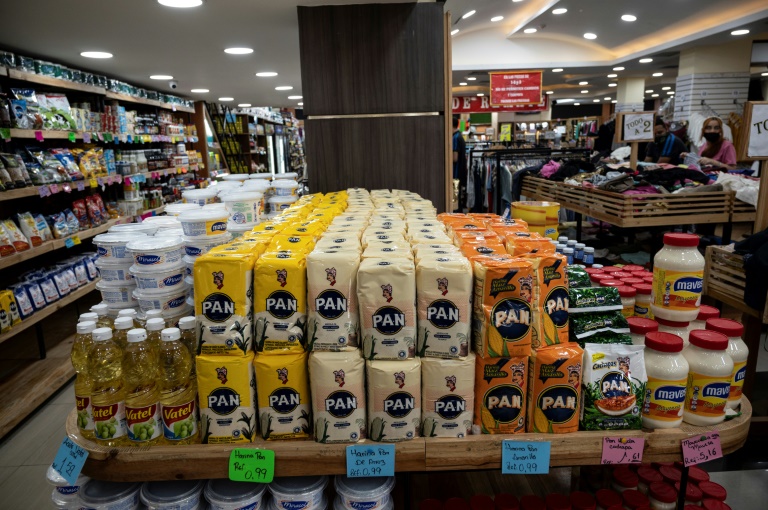
Prices on many shop shelves are displayed in US dollar, to keep things simpler © AFP / Yuri CORTEZ
Buses and bus stops have become informal currency exchange offices where kids with thick wads of bolivars buy travelers’ dollars, at a premium.
In the 24 hours leading up to Friday’s recalibration, the dollar soared on the black market though the exchange rate remained stable on official central bank rates.
Fearful of operational problems, many businesses in Caracas have limited bolivar-based transactions.
[ad_2]
Source link
Comments


South Sudan at the Brink: How Corruption Tightens Its Grip on a Rare Working Institution

Wantam Protests Hit Ugunja as CS Opiyo Wandayi Loses Support, Youths Invite DCP Led by Rigathi Gachagua
Wantam Protests Hit Ugunja as CS Opiyo Wandayi Loses Support, Youths Invite DCP Led by Rigathi Gachagua
South Sudan at the Brink: How Corruption Tightens Its Grip on a Rare Working Institution

Chepterit Comes Alive During SportyBet Kenya Gifts Motorbike to Loyal Fans

Nest Lounge Narok Under Scrutiny as KRG The Don Shooting Incident Triggers Government Silence and Maasai Community Outcry

Why the Sh323.8 Billion Kenya US Health Agreement Is Raising Data Privacy Questions

Betty Bayo’s Mother Seeks DPP Inquest Over Daughter’s Death

Ugunja Women Cry Foul After MP Appointments Snub Them Despite Campaign Support

KSh4M Serve! SportyBet Kenya Title Sponsors for Kipchumba Karori Eldoret International Volleyball Tournament

Shadrack Maritim Resurfaces in Uganda After Two-Month Disappearance