

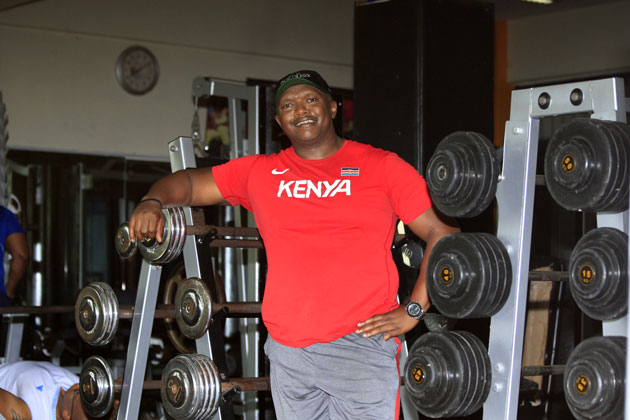
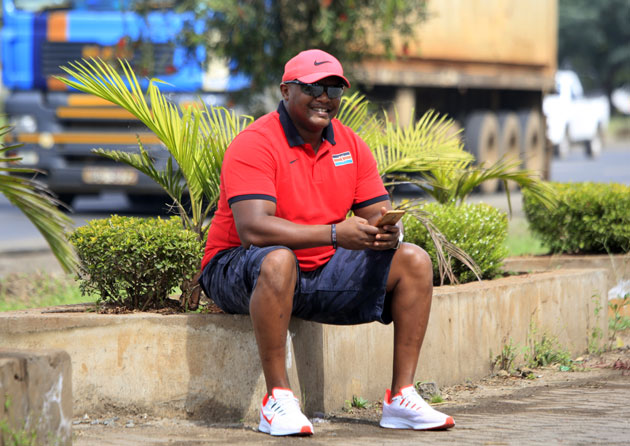
NAIROBI, Kenya, Apr 21 – Kenyan football legendary Dennis Oliech had a successful outing in the sport, but Strength and Conditioning Coach, Geoffrey Kimani believes that the former Harambee Stars skipper would have been a top notch sprinter if he didn’t play soccer.
Oliech, is famed for his compact and shear power in speed, that enabled him terrorise defenders during his playing days and in 2019 when he made a comeback to football, turning up for titans Gor Mahia, the former Nantes, Auxerre and Ajaccio striker said no player in the Kenyan Premier League would match his speed.
“My strong point has always been the ability to run fast and I believe over the 100m distance, there is no player locally faster than me,” Oliech said back then in 2019 when he returned to active football after two years.

And it’s from this characters that Oliech possess that saw Kimani pick him out as one of the best sprinters that Kenya never had.
“If Dennis (Oliech) didn’t get a contract in soccer he would have been a great sprinter in Kenya. He was a very fast player, you could see in his compactness and look at the kind of goals he would score, he would sprint past defenders, if you are a defender and you facing Dennis, then you need to match your speed and strength level, otherwise you will lose contact,” Kimani, a former sprinter told Capital Sport.
Kimani, who is the National Olympic Committee of Kenya (NOCK), Strength and Conditioning consultant coach, is a sprint specialist tactician as well and is credited for nurturing stars like 400m runner Collins Omae among others.
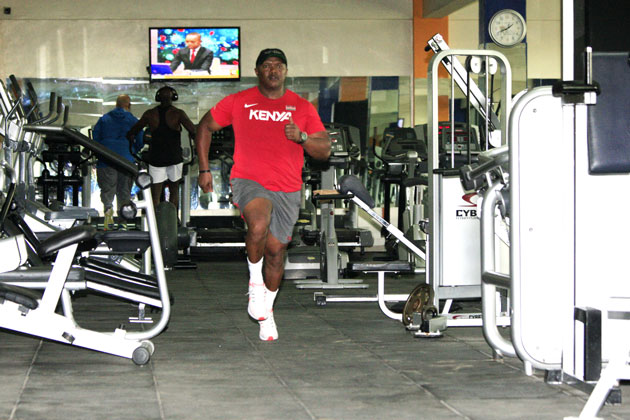
The coach, who was one of the coaches when Kenya topped the globe in 2015 World Athletics Championships, reveals that, the qualities that Oliech owned is what makes a complete player who can compete at an elite level, may it be rugby, athletics, racket games or football because speed, strength and agility is a plus in any sport.
Kimani, who has worked with Mathare United and Harambee Stars, disclosed that Gor has been able to dominate in the local scene because the management was able to have a fully equipped backroom staff that saw the physiotherapist as well as Strength and Conditioning coach play a huge role.
“If you want to compete in the elite level, then you have to be able to perform across all facets, nowadays every athlete wants to be strong, fast, that what makes you exceptional, so it’s important for you to be able to perform at your highest level and that what distinguishes one from elite athlete or somebody doing it for hobby,” Kimani, an Highway Secondary alumni underscored.
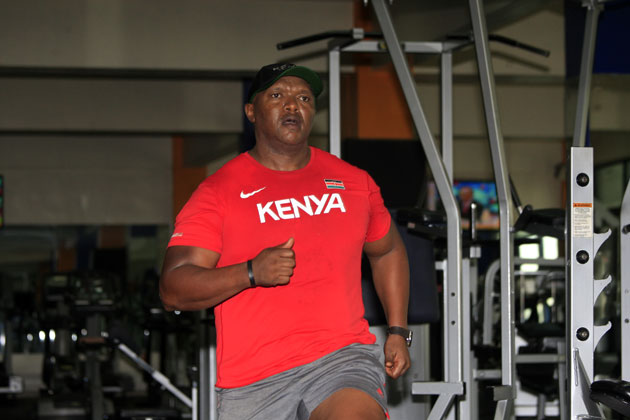
“Gor did a deliberate way of improving their performance by enhancing a full backroom staff and this made them succeed. There are three facets of conditioning that gives you performance. One is physical which entails running, loading and sprinting. The second is the nutrition aspect, maybe a player has gained or lost weight, then the nutritionist will be able to advice accordingly, the last one is recovery, which if the player needs to sleep for eight hours then it must be allowed to do so.”
He added; “If you want to compete at the highest level and looking for consistency, we must start embracing as many experts as possible, whichever sport it is even if its soccer, anybody can juggle, anybody can dribble, but it’s those extra things that you do, how fast can you do them? They are the game changing moment that are as a result of speed, strength and power and if you want to outwit your opponent then you must train at a very advanced level in terms of the science that is needed to improve performance.”
-Atuka-
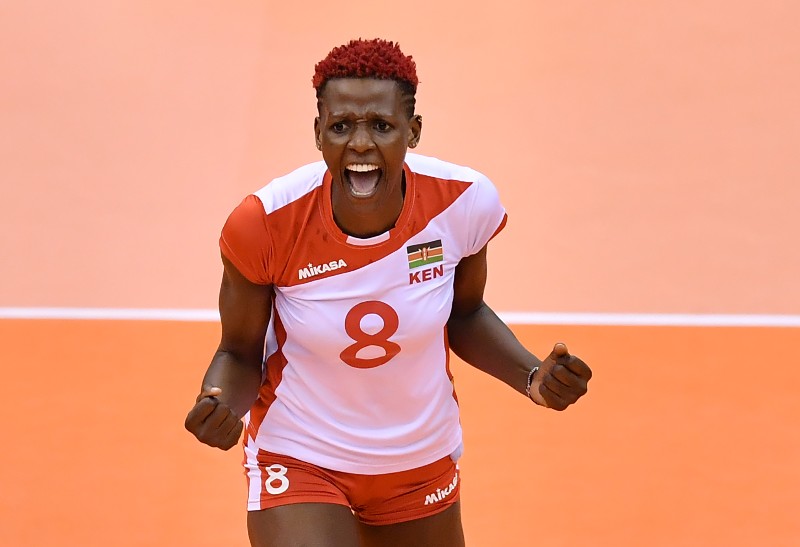
Kimani is also working with national women’s volleyball team, Malkia Striker middle blocker Triza Atuka to aid her recover fully after she underwent a successful surgery on her left knee in October last year.
Atuka, who was instrumental when Kenya qualified for the Tokyo Olympics, ruptured her Anterior Cruciate Ligament during the final leg of the Kenyan Volleyball Federation league in Kapsabet, and is happy she was handed another opportunity to grace the Summer Games after it was postponed to next year due to COVID-19 pandemic.
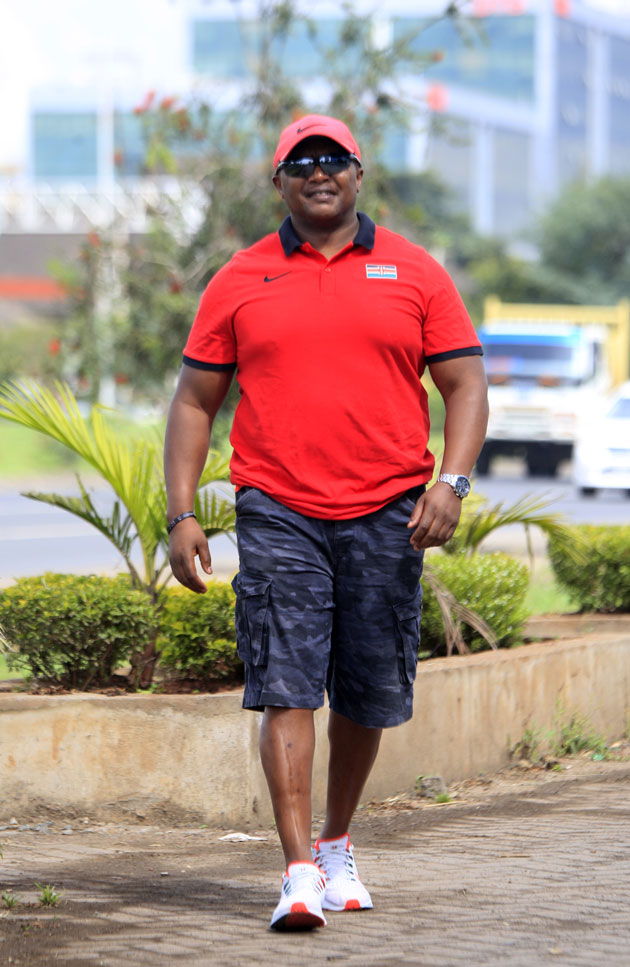
“My day starts at 5am, by 6am I am in the weight room, then do a 1 or 2 hours shift depending on which athlete I’m having, it could be on the pitch, track or in the athletes’ house, like now I’m working with Triza Atuka, she is on her journey back to recovery after surgery so my day is done around 3pm,” Kimani, a father of three narrated.
“Atuka will be fit to compete for Olympics because there is time for her to recover. She is responding well.”
-Rugby-
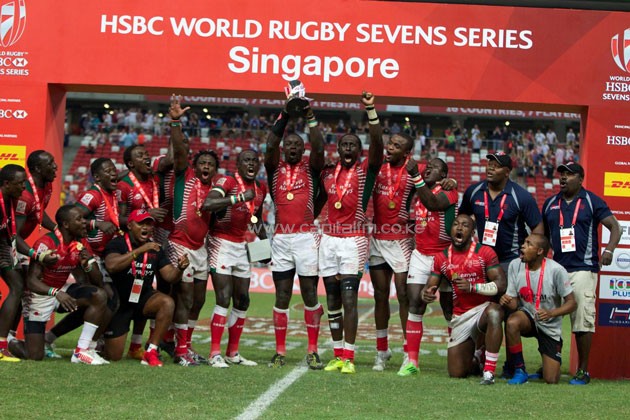
Kimani is well known in the rugby circles, having had a long stint with the Kenya Sevens team as the Strength and Conditioning coach and is part of the team that won the first ever World Series Cup title back in 2016 at the Singapore 7s.
The coach revealed the importance of having a Strength and Conditioning Coach especially in the Sevens team, and it’s important that the tactician do accompany the team wherever they travel for competitions.
“Kenya under Benjamin Ayimba was first team in the IRB Series to hire a sprints coach in 2008, there after teams started hiring speeds specialists and they now have gone to the extent of signing out and out sprinters like USA and Australia,” Kimani pointed out.

“It’s important for a rugby player to be fit because in 7s they will cover about 1.5 to 1.8 km in one game. Someone needs to have superior levels of fitness in terms of endurance, speed, power and compact. You must prepare them since it’s a contact sport, they must be conditioned according to the opponent they face, if not, they can get injury, a fit player will avoid injury.”
“I came in at Kenyan sevens as sprints coach, my job was to come in for two or three times a week to conduct speed and agility sessions, and with time my expertise was needed to go beyond speed. I then went to class and started learning more about rugby and strength and conditioning for rugby.
“Flexibility is also key in rugby, so conditioning coach goes beyond making them strong and fast, for them to pass the ball swiftly, to pass the ball accurately and far away they must have thoracic mobility around their chest and back area,” Kimani noted.
-The work of Strength and Conditioning Coach (SNC) during World Series Tour-
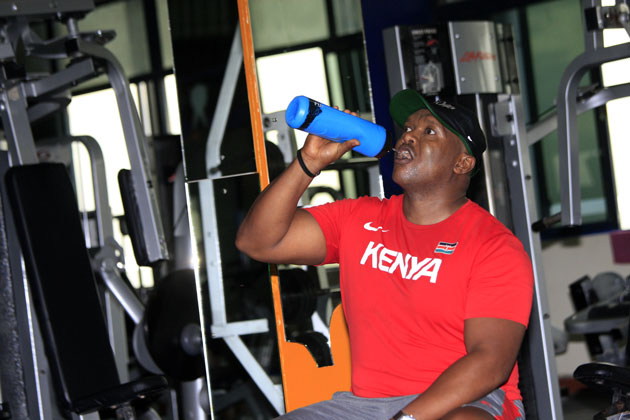
-Week 1-
“The players take either a long or short flight, then when they arrive the times are different compared to ones at home, so they must adapt as fasts as possible to new clock, it’s up to the SNC to draw a plan, the players must not to sleep, the SNC should find an activity for them till the normal sleeping hours according to the time of that country.
“Must do assessment every morning and see if there are issues that came up during the flight such that are their hips tight, are they having a hamstring?.
“Day three, will see every morning players get in touch with the SNC, we must work with the clock back at home, here the SNC will draft a log of their sleep patterns, check with the players how the sleep was, did they have trouble in sleep, did you sleep for eight hours?, then we do the weight check to see who has added and who has lost.
“The third thing is to do urine test to check the dehydration, they could be losing the weight because of dehydration.
“On the day of competition, the SNC wakes up the players and do blow out, remember they are away from home so the mental aspect is key, the SNC should have a program that will bring them to the game, then they go get their strapping.
“Once they get on the pitch, the SNC will go to the warm up area with stop watch to time the distance from the warm up area to the changing room because they work with strict timelines. The SNC will then write a plan out of that because player should be in the tunnel ready warmed up to enter into the pitch not to keep them there for long.
“After game one, when players are outside talking to coach, the SNC and Physio will run to the changing room, they will prepare the recovery material which include the isotonic drinks, ice bags, supplements and during this time, we must do it in a window of 45 minutes.
“Then head to the dining room, the players will have a snack, then after 15 minutes, they head out to the chill room to relax till an hour before the next game. Now repeat that for three games and two weeks in two tournaments so that can tell you the importance of having the SNC in a tour,” Kimani explained.
-Week 2-
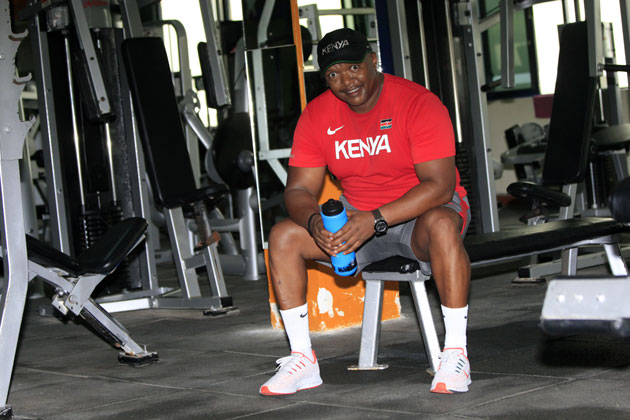
“The SNC becomes very crucial. The players have played over the weekend, on Monday they are in flight to the next tournament. Already, the players are tired so the SNC determines the kind of sessions that will see them recover as quickly as possible.
-Coached should be signed for long term-
The coach urged of federations to avoid the turnover of tacticians, outlining that this is what affects the performance of teams.
In Kenya, it’s hard for a coach to be handed a five year contract with football and rugby being notorious.
“Winning the Singapore 7s in 2016 was emotional, it was satisfying because it had taken a lot of time behind the scenes, sometimes back Benjamin (Ayimba) and I were kicked out of the team, some coaches came in they were close to winning the Cup. I think God wanted to pay us back for our effort,”Kimani recalled.
“There is no reason why Kenya should not win at least two cups in a season. Conditioning plays a key role but consistency is what is needed. Consistency in coaches too, long term preparations is what we are lacking in Kenya. Look at the best coached teams in the Series they have changed few coached. Let the coach have his time to develop what he is looking for at least a 5 year plan that will see a smooth transition,” Kimani opined.
“If you look at the team that won the Cup in Singapore, six or seven players were rookies in 2016, Humphrey (Kayange) was in that team so he was going to play two or three then he was out, but for the rookies the likes of Olindi and Onyala they would have been superstars,” he added
-Memorable moments

“I have quite nice moments that I won’t forget, like the first final in Adelaide in 2009, the team was an armature in terms of conditioning we did not have a gym. Other sweet memories are beating New Zealand and Fiji for the first time
“In athletics, I was privileged to be in team that won the overall title in 2015 World Championships for the first time ever, it’s been a good journey in all sports I have worked across.
“I have also been privileged to work with Jacob ‘Ghost’ Mulei in a team that was with full of local players and we managed to hold Nigeria in Kenya,” Kimani stated.
-Worst moment
“First time Kenya 15s ventured to play against a professional team the Pumas of South Africa, we were being walloped 101-5 and I was the conditioning coach then, so these are those moments, but we learn from them.
“In 2015 I gave Collins Omae wrong tactics in 400m I told him to go all out because I thought the way he was running the rounds he was holding himself too much, so I told him to go all out to see if we can qualify so he went out as fast as he could and at 300m his recourses were all gone and all over sudden he started running in reverse, so there are things that really hit you in the face but we learn from them, your mistakes makes you better,” Kimani said.
-BY RAYMOND MAKHAYA
(Visited 15 times, 15 visits today)
 rn
rn  rn
rn  rn
rn  rn
rn  rn
rn  rn
rn  rn
rn  rn
rn  rn
rn  rn
rn  rn
rn  rn
rn  rn
rn  rn
rn  rn
rn  rn
rn  Loading ...
 rn
rn  rn
rn  rn
rn  rn
rn  rn
rn 

 ","httperror":"Oops, something went wrong...please try again","contactgoogle":"Contacting Google","firsttime":"Seems this is your first time with this signin system. Please wait as we get your name","signinsuccess":"Cool. You're now signed in. This signin will close automatically now","pendingrequest":"Still communicating with the server","signedout":"Seems you were signed out. Try submitting again after you've been signed in","trackingerror":"Couldn't track Analytics","xhrnotconfigured":"To webmaster: Please confirm the xhr/ajax receptor is configured on the server","loadmore":"Load more stories"}};
/* ]]> */
","httperror":"Oops, something went wrong...please try again","contactgoogle":"Contacting Google","firsttime":"Seems this is your first time with this signin system. Please wait as we get your name","signinsuccess":"Cool. You're now signed in. This signin will close automatically now","pendingrequest":"Still communicating with the server","signedout":"Seems you were signed out. Try submitting again after you've been signed in","trackingerror":"Couldn't track Analytics","xhrnotconfigured":"To webmaster: Please confirm the xhr/ajax receptor is configured on the server","loadmore":"Load more stories"}};
/* ]]> */






Comments