
General News
Allan Chesang Goons Brutally Attack Standard and K24 Journalists in Cherengany as Corruption Cover-Up Claims Deepen

Two journalists in Trans Nzoia County were violently assaulted while covering a political event in Cherengany, in an attack that has intensified scrutiny on Senator Allan Chesang and his alleged links to intimidation tactics.
The incident, which left both reporters injured, unfolded in broad daylight during a United Democratic Alliance meeting and was captured on video.
The assault came just hours after a damning media report linked Chesang to a fake ambulance scandal involving Interior Principal Secretary Raymond Omollo.
The sequence of events has raised urgent concerns about press freedom and the use of violence to suppress accountability.
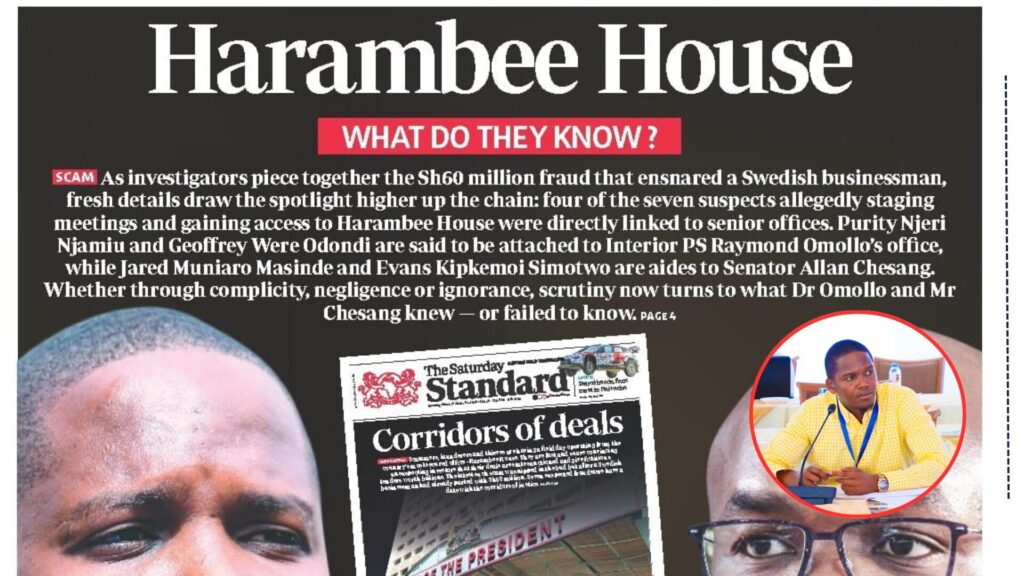
The attack by goons linked to Allan Chesang exposes a dangerous trend where rogue leaders use violence to silence journalists uncovering corruption and theft of public funds. [Photo//Courtesy]
Allan Chesang Goons Are Targeting Journalists to Silence Corruption Coverage
Evidence gathered from eyewitness accounts and video footage strongly indicates that the attack was deliberate and directly linked to recent media coverage. George Njoroge, a reporter with Media Max, and Gilbert Sitati, a cameraman with KTN, were on assignment at the Cherengany event when a known political supporter confronted them aggressively.
The confrontation escalated after the attacker accused the journalists of publishing damaging information about Senator Chesang. Njoroge bore the brunt of the initial assault, suffering physical injuries as the attacker struck him in full view of the crowd. Sitati, who was filming the incident as it unfolded, quickly became a target when the assailant attempted to seize his phone, apparently to destroy recorded evidence of the attack.
Fellow journalists and bystanders intervened and managed to pull the two reporters away from the attacker before the situation spiraled further out of control. Their intervention likely prevented more serious injuries, but the damage had already been done. Both journalists sustained injuries, and the attack sent shockwaves through the local media fraternity.
The timing of the assault has drawn particular attention. It occurred shortly after The Standard published an explosive report linking Chesang and Omollo to a questionable ambulance procurement deal. The proximity between the publication of that story and the violent confrontation has fueled claims that the attack was a calculated move to intimidate journalists and deter further reporting.
Corruption Allegations Provide Context for the Attack
The Cherengany assault cannot be separated from the broader corruption allegations that continue to surround Senator Chesang. The Standard report that appears to have triggered the attack detailed claims that Chesang played a central role in a fake ambulance deal connected to senior officials within the Interior Ministry.
These allegations add to a long list of controversies associated with the senator. Notably, Chesang has previously faced accusations in a 2018 case involving a Ksh 180 million fake laptop tender linked to Harambee House Annex. Prosecutors in that case alleged that Chesang and several associates defrauded Makindu Motors Limited by falsely claiming they could secure a lucrative government tender through connections within the Office of the then Deputy President (William Ruto).
Although that case has dragged through the legal system without a definitive conclusion, it significantly shaped public perception of Chesang’s dealings. Critics argue that repeated mentions of his name in major procurement scandals point to a pattern that cannot be ignored.
The latest claims involving the ambulance deal have only intensified that scrutiny. Investigative sources suggest that the deal may have involved manipulation of procurement processes, raising serious concerns about misuse of public resources. While Chesang has not been convicted in relation to these allegations, the growing number of claims has placed him under a cloud of suspicion.
Pattern of Intimidation Raises Alarm Over Press Freedom

The conduct associated with Allan Chesang reflects poorly on public office, raising serious concerns about integrity, accountability, and respect for the rule of law in leadership [Photo//Courtesy]
This strategy undermines the role of the press as a watchdog. When journalists are attacked for reporting on alleged corruption, it sends a clear message that certain topics are off-limits. The result is a chilling effect that discourages in-depth reporting and weakens public accountability.
In the Cherengany case, the attacker acted with a level of confidence that suggests he did not fear immediate consequences. That perception of impunity raises serious questions about enforcement of the law and the willingness of authorities to hold politically connected individuals accountable.
The brazenness of the attack, carried out in a public setting and captured on camera, further underscores the urgency of the situation. If such acts go unpunished, they risk becoming normalized, creating an environment where violence replaces dialogue and intimidation replaces transparency.
Growing Pressure on Authorities to Act Decisively
The assault has triggered calls from media organizations and civil society groups for swift and decisive action. Stakeholders have urged law enforcement agencies to identify and prosecute those responsible, regardless of their political affiliations.
There is also increasing pressure on national leaders to publicly condemn the attack and reaffirm their commitment to protecting press freedom. Failure to act decisively could erode public trust in institutions tasked with upholding justice and safeguarding democratic principles.
For the injured journalists, the incident represents more than a physical attack; it is a stark reminder of the risks associated with investigative reporting in politically sensitive environments. For the country, it serves as a critical test of whether the rule of law can prevail over intimidation and power.
Unless authorities take firm action, the message sent by the Cherengany attack will remain dangerously clear: those who expose alleged corruption may find themselves facing not just legal battles but physical threats as well.
Comments

UDA Politician Arrested Over Sixty Million Shilling Fake Tender Scam at the Office of the President
National Youth Service Officially Launches 2026 Nationwide Recruitment Exercise for Kenyan Youth

The Absa Kenya Dossier on Extortion Cartels, Boardroom Purges, and the Million-Dollar Client Hunt

Why CS Opiyo Wandayi is Losing the Siaya Power War to Governor Orengo

The NSSF Audit Dossier on Mismanaged Billions and Stalled Housing Projects

“Enough is Enough”: DP Kindiki Issues Stern Warning to Ruto Critics

How the DCI and Kisumu County Officials Shield the Medprime Training College Syndicate While Students Buy Worthless Certificates

How Interior PS Raymond Omollo and Senator Allan Chesang Ran a Sh60 Million Fake Tender Scam

Allan Chesang Goons Brutally Attack Standard and K24 Journalists in Cherengany as Corruption Cover-Up Claims Deepen
Allan Chesang Goons Brutally Attack Standard and K24 Journalists in Cherengany as Corruption Cover-Up Claims Deepen
How the DCI and Kisumu County Officials Shield the Medprime Training College Syndicate While Students Buy Worthless Certificates
How Interior PS Raymond Omollo and Senator Allan Chesang Ran a Sh60 Million Fake Tender Scam
The NSSF Audit Dossier on Mismanaged Billions and Stalled Housing Projects
The Absa Kenya Dossier on Extortion Cartels, Boardroom Purges, and the Million-Dollar Client Hunt
“Enough is Enough”: DP Kindiki Issues Stern Warning to Ruto Critics
Why CS Opiyo Wandayi is Losing the Siaya Power War to Governor Orengo
UDA Politician Arrested Over Sixty Million Shilling Fake Tender Scam at the Office of the President
National Youth Service Officially Launches 2026 Nationwide Recruitment Exercise for Kenyan Youth

Xiaomi Unveils REDMI Note 15 Series: REDMI Titan Durability Meets Advanced Imaging
-
General News4 days ago
UDA Politician Arrested Over Sixty Million Shilling Fake Tender Scam at the Office of the President
-
Jobs4 days ago
National Youth Service Officially Launches 2026 Nationwide Recruitment Exercise for Kenyan Youth
-
 Business News9 hours ago
The Absa Kenya Dossier on Extortion Cartels, Boardroom Purges, and the Million-Dollar Client Hunt
-
 Politics2 days ago
Why CS Opiyo Wandayi is Losing the Siaya Power War to Governor Orengo
-
 General News8 hours ago
The NSSF Audit Dossier on Mismanaged Billions and Stalled Housing Projects
-
 Politics2 days ago
“Enough is Enough”: DP Kindiki Issues Stern Warning to Ruto Critics
-
 General News4 hours ago
How the DCI and Kisumu County Officials Shield the Medprime Training College Syndicate While Students Buy Worthless Certificates
-
 General News6 hours ago
How Interior PS Raymond Omollo and Senator Allan Chesang Ran a Sh60 Million Fake Tender Scam