Many children started the lockdown feeling agitated, parents say, but then boredom sunk in. “Being alone is very hard,” said Lia, the 9-year-old, who is an only child. She said she had stopped calling her friends because she had “nothing more to tell them” and preferred to play alone. “It’s been long, very long,” she added.
The lockdown has likely hit low-income families especially hard, since many live in cramped quarters.
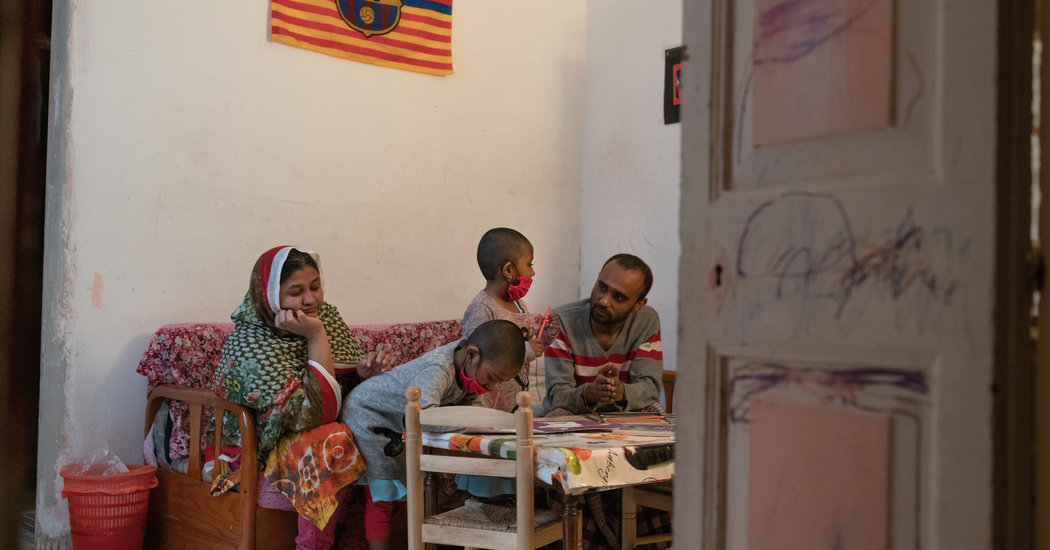
Mafus Rohman and his wife, Samina, share a two-bedroom apartment with their 5-year-old twins, who sleep in their bedroom, and an older family relative who sleeps in the other one. Mr. Rohman runs a bar that he has been forced to shut down during the lockdown, and he said that he couldn’t afford to pay the rent this month.
“They keep asking what’s going on,” Mr. Rohman said at his apartment as the twins, Misha and Maliha, colored pictures nearby. “At least we are all together.”
The children who may be at the most risk of suffering long-term effects from the lockdown, said Mr. Figuera, the psychiatrist, are those who were in therapy before the coronavirus crisis hit.
Children with autism, for example, are given an exemption that allows them to go out with a parent, but some families say they have tried to keep them inside to protect them.
“If I take him out and tell him that no, we can’t go to the park, that no, we can’t go to school, or that he can’t see his grandparents, he’s going to have a meltdown,” said Anais Sanchez of her 8-year-old son, Odaï Abdeldayem, who has autism.
Related reporting
More World News →
South Sudan’s Oil Looters: How Young Elite Gatekeepers Plunder Nation While Citizens Starve

General to Private: Kiir Crushes Economic Vice President in South Sudan's $1.7 Billion Corruption Purge

Paul Biya’s Re-Election: What Cameroon’s Political Longevity Reveals About Leadership and Governance in Africa