The Labor Department weighed in Monday on a question whose answer could be worth billions of dollars to gig-economy companies, deciding that one company’s workers were contractors, not employees.
The letter provides further evidence that the Trump administration is departing from the approach of its predecessor on a key wage issue.
Gig companies are assuming a more prominent role in the economy, and many are beginning to sell shares to the public. But industry officials estimate that requiring such companies to classify their workers as employees would raise their labor costs by 20 to 30 percent.
As a result of Monday’s action, the company in question will not have to offer workers the federal minimum wage or overtime, or pay a share of Social Security taxes.
“Today, the U.S. Department of Labor offers further insight into the nexus of current labor law and innovations in the job market,” Keith Sonderling, acting administrator of the division that oversees such issues, said in a statement. It is a longstanding policy for the department not to disclose the names of companies receiving such letters.
Under the Obama administration, the Labor Department issued guidance suggesting that gig workers like drivers for Uber and Lyft were likely to be employees, a stand the department rescinded several months after Mr. Trump took office.
“There are few more contentious issues currently than the status of workers operating on platform-type business models,” said David Weil, the administrator who issued the guidance under President Obama and is now dean of the Heller School at Brandeis University.
Unlike the broad guidance the Obama administration issued, the action announced Monday took the form of an “opinion letter” applying only to the company that sought it. But other businesses in the industry tend to parse such letters closely for insight into the department’s approach. And the letters have more practical legal force than departmental guidance for the company in question. They are often referred to as “get-out-of-jail free cards” because they mean that the Labor Department won’t initiate enforcement proceedings against a company with a favorable letter.
The letter can also provide a powerful defense to the company if workers sue it or initiate arbitration proceedings to resolve allegations of improper classification.
“It is outrageous for the Department of Labor to set policy in such an important area through the device of an opinion letter,” Mr. Weil said. “The Obama administration discontinued opinion letters precisely because they are a capricious tool for settling complicated regulatory questions.”
Based on the description in the opinion letter, the company that sought it does not appear to be Lyft, which went public in March, or Uber, which plans to go public in the coming weeks.
But the letter could nonetheless have important implications for these companies. Uber, in its filing for a public offering, told prospective investors that having to classify drivers as employees would cause it to “incur significant additional expenses” and “require us to fundamentally change our business model, and consequently have an adverse effect on our business and financial condition.”
Lyft has made similar statements.
Sharon Block, a former top official in the Obama Labor Department who is executive director of the Labor and Worklife Program at Harvard Law School, said it was hard to tell from the facts the Labor Department chose to include in its letter whether the workers using the platform in question were truly independent contractors. But she said there seemed to be a stronger case to make for contractor status in that case than for Uber.
Still, she speculated that the finding could be procedurally useful for the department if it later sought to deem Uber drivers to be independent contractors.
“This as a strategy makes sense,” Ms. Block said. “They set the standard in a way that makes it really clear this company gets past it, and in a way that’s going to help them in the harder cases.”
The department could subsequently argue, in effect, that Uber’s business model largely overlaps with the business model of the company in question, and conclude that its workers are contractors as well.
Uber did not respond to a request for comment, and Lyft said it had no immediate comment.
Related reporting
More World News →
General to Private: Kiir Crushes Economic Vice President in South Sudan's $1.7 Billion Corruption Purge
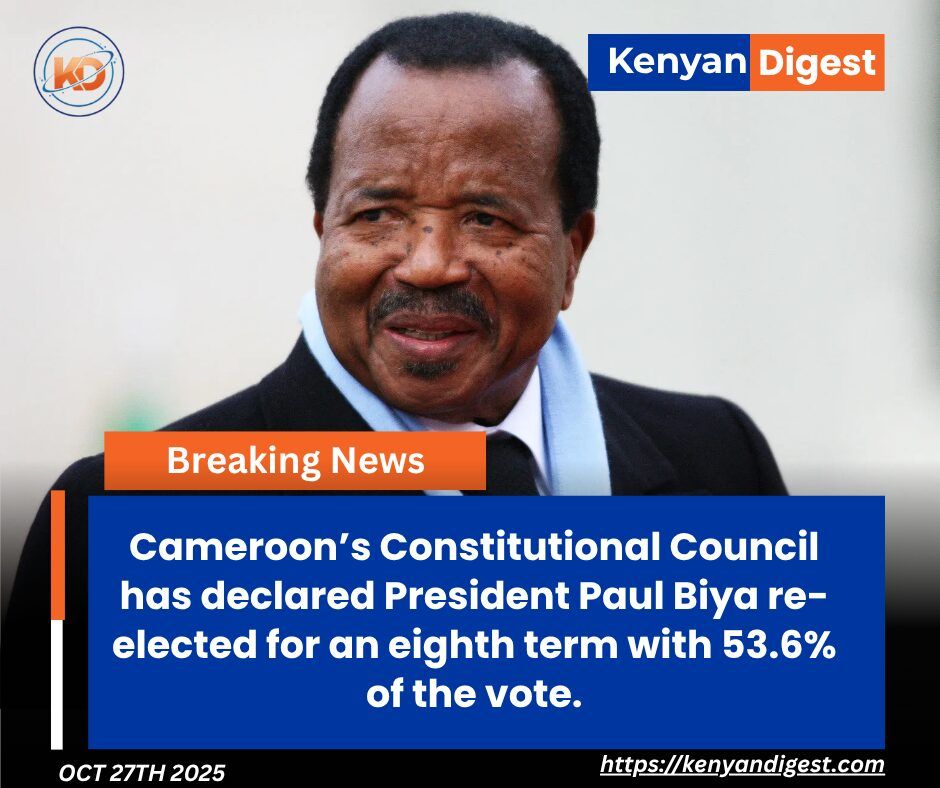
Paul Biya’s Re-Election: What Cameroon’s Political Longevity Reveals About Leadership and Governance in Africa

From Power to Prison: The Fall of France’s Former President Nicolas Sarkozy