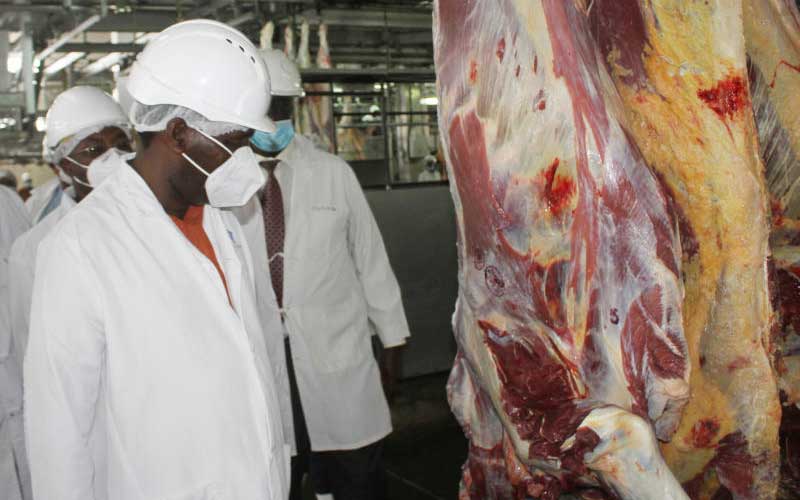
Agriculture CS Peter Munya (left)) tours the Kenya Meat Commission's Athi River plant yesterday. He blamed the contractor for delayed modernisation work at the plant.
SEE ALSO: Cane farmers back new crop regulations
The CS said the government will seek partners from the private sector to ensure that the plant does not shut down. “We believe this is a very strategic asset and we cannot let it go. After revamping it, we will consult on how to work with the private sector so that the plant remains afloat,” he said. The CS also hinted that KMC would lease out some of its properties such as idle land to generate more money to run the plant. He announced that the plant’s suppliers, who have not been paid for the last three years, will be paid next week. “We have been facing a major financial crisis which made it hard to pay our suppliers. However, the money is ready now, and we are in the process of verifying payment claims,” said Munya.SEE ALSO: Sh5b projects planned for western, Ukambani
Unpaid herders Groups of herders have been storming KMC plants demanding payments amounting to Sh380 million for supplying livestock. Many have since stopped supplying the firm with livestock due to non payment. The KMC was re-opened in 2006 with the government targeting to promote the meat industry for both the domestic and export markets. Its under-performance has been attributed to lack of funds to revamp plants that still run on ageing machines and reluctance by government institutions to support the firm by purchasing meat from its plants. The firm is currently facing operational challenges that have seen production plummet.SEE ALSO: Blow to government as court rules against ban on commercial donkey slaughter
At the peak of its operations, the Athi River plant slaughtered 500 animals per week. The figure has now plummeted to 50 animals. During the visit, Munya also announced mass livestock treatment, deworming and vaccination targeting more than 18 million cattle, 26 million goats, 18 million sheep, and 2.2 million camels countrywide. The treatment and vaccination aims at eliminating foot and mouth, Rift Valley fever and bluetongue diseases. Calling on counties to commit more money to the sector, Munya said the government was keen to promote livestock keeping by securing foreign markets for farmers. “At least 90 per cent of the population within arid and semi-arid areas depend on livestock products including meat, milk and hides, therefore there is need to develop strategies to protect the animals for the benefit of our people and the economy,” he said.SEE ALSO: Hope for Embu coffee farmers as Munya mulls Sh135m debt waiver
Related reporting
More Business News →
High Court Blocks Oigara Bank Fraud Probe as Stanbic CEO Escapes Questioning

15 Proven Ways to Make Money Online in Kenya; No Scams!

High Court Halts Equity Bank's Takeover Bid on Swafi Foods in Landmark Ruling
