The Federal Reserve, along with Congress, failed to take sufficient steps to revive the economy after the 2008 financial crisis. One simple measure of the inadequacy of the government’s response is that inflation has remained persistently below the 2 percent annual rate the Fed regards as optimal, a sign of an underachieving economy.
Some liberals have complained for years about the Fed’s lack of urgency as millions of Americans struggled to find jobs, or lived without significant wage increases. Since President Trump’s election in 2016, a growing number of Republicans have decided they, too, favor stronger economic growth. Mr. Trump himself has been particularly outspoken, loudly and repeatedly pressing the Fed to reduce borrowing costs.
Lately Mr. Trump has gone even further, declaring he plans to nominate two of his political supporters, Stephen Moore and Herman Cain, to the Fed’s board of governors.
Mr. Moore and Mr. Cain are exceptionally unqualified to serve on the Fed’s board. Both men argued for the Fed to reduce its economic stimulus campaign while Barack Obama was president and then began to insist the Fed should do more following Mr. Trump’s election. Since the need for economic stimulus was greater during the Obama years, the positions taken by Mr. Moore and Mr. Cain demonstrate either a profound lack of understanding of monetary policy — or a view that the Fed should serve the political needs of the Republican Party. Or perhaps both. It’s little consolation that they seem unlikely to influence the 17 current members of the Fed’s monetary policymaking committee. If they are confirmed, it would upend a longstanding bipartisan commitment to filling the Fed’s board with highly qualified technocrats who seek to serve the nation’s long-term economic interest.
But the Fed and its defenders must do more than try to bar the doors of its marble headquarters. The Fed’s critics have a point. Congress has sheltered the central bank from political interference so it can make difficult decisions in the interest of the American people. The Fed needs to show it has learned from its disappointing performance over the last decade. It needs to articulate a plan to respond more effectively to the next downturn.
The core of the problem is the Fed’s inflation target. Since the double-digit inflation rates of the late 1970s, the Fed has focused on maintaining slow and steady inflation. In 2012, it formalized an annual target of 2 percent. But the Fed has fallen short of that mark in six of the last seven years, and its top officials predict it will miss the target again in 2019.
After the 2008 crisis, the Fed repeatedly hesitated to provide larger doses of economic stimulus because it was concerned about overshooting the target. In plain English, the Fed allowed millions of Americans to remain unemployed or underpaid because it feared that prices would start rising more quickly. It is now clear the Fed miscalculated — and caused a lot of pain.
Low inflation also is a problem in its own right. It may seem odd to seek higher prices, but economists generally agree that a little inflation is a good thing. It keeps the economy at a safe distance from the prospect of a general decline in prices, or deflation, which can limit economic activity as people wait for still lower prices. Inflation also gives the Fed more room to cut borrowing costs during economic downturns. And inflation eases economic adjustments by allowing companies to cut real wages without cutting nominal wages.
The Fed is a deliberate animal; it has always preferred to fail by not doing enough. But there are signs the Fed is aware of the need for change. Jerome Powell, the Fed’s chairman, said in March that low inflation is “one of the major challenges of our time.” The Fed is hosting a conference in Chicago in June to gather advice from outside experts.
Already there are a number of interesting ideas in circulation. Mr. Powell’s immediate predecessors, Janet Yellen and Ben Bernanke, both have backed a proposal for the Fed to allow higher inflation after periods of low inflation — in effect, replacing the Fed’s 2 percent annual inflation target with the goal of hitting a 2 percent average over time.
Others would like the Fed to set a 4 percent inflation target, or to replace inflation targeting entirely. Under one alternative, nominal G.D.P. targeting, the Fed would aim for a steady rate of growth in the value of the nation’s economic output — a measure that includes the effects of inflation. During periods of slower growth in the inflation-adjusted value of that economic output, the Fed would seek to compensate by allowing higher inflation.
All of these are fancy ways of saying that the Fed should have kept interest rates lower for longer after the 2008 recession, to deliver a significantly stronger dose of economic stimulus, and that it should show a little less fear of inflation the next time the economy needs its help.
By choosing one of these methods, the Fed can begin to demonstrate that it has learned the lesson.
Related reporting
More World News →
General to Private: Kiir Crushes Economic Vice President in South Sudan's $1.7 Billion Corruption Purge
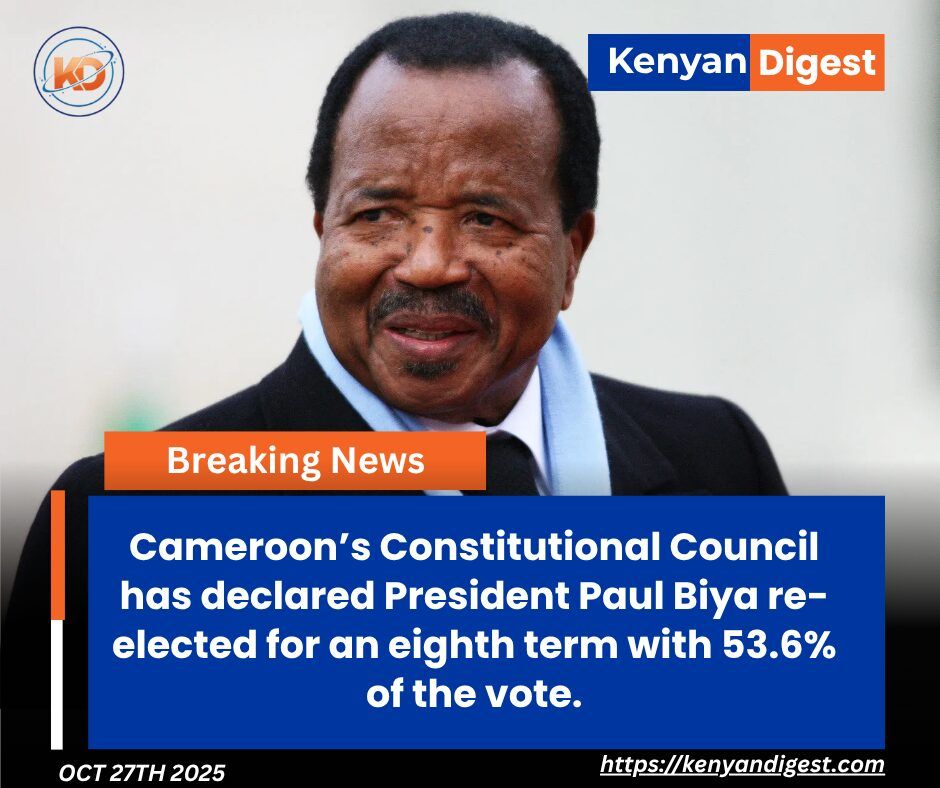
Paul Biya’s Re-Election: What Cameroon’s Political Longevity Reveals About Leadership and Governance in Africa

From Power to Prison: The Fall of France’s Former President Nicolas Sarkozy