To hear more audio stories from publishers like The New York Times, download Audm for iPhone or Android.
“Defund the police” is a catchy phrase, but some Americans hear it and imagine a home invasion, a frantic call to 911 — and then no one answering the phone.
That’s not going to happen. Rather, here’s a reassuring example of how defunding has worked in practice.
In the 1990s, both the United States and Portugal were struggling with how to respond to illicit narcotics. The United States doubled down on the policing toolbox, while Portugal followed the advice of experts and decriminalized the possession even of hard drugs.
So in 2001, Portugal, to use today’s terminology, defunded the police for routine drug cases. Small-time users get help from social workers and access to free methadone from roving trucks.
This worked — not perfectly, but pretty well. As I found when I reported from Portugal a few years ago, the number of heroin users there fell by three-quarters and the overdose fatality rate was the lowest in Western Europe. Meanwhile, after decades of policing, the United States was losing about 70,000 Americans a year from overdoses. In effect, Portugal appeared to be winning the war on drugs by ending it.
That’s the idea behind “Defund the Police” as most conceive it — not to eliminate every police officer but to reimagine ways to make us safe that don’t necessarily involve traditional law enforcement.
This conversation is long overdue. But I’m also worried that the phrase will amount to a gift to President Trump and Mitch McConnell. A recent poll found only 16 percent of respondents favor cutting funds for police departments, even as huge majorities acknowledged racial bias in policing and favored police reforms. Only 33 percent of black respondents and 17 percent of Hispanic respondents favored cutting police funding.
Trump is already trying to score points from the phrase. “Defunding Police would be good for Robbers & Rapists,” he tweeted, quoting a senator.
James Forman Jr., a Yale law professor who wrote a Pulitzer Prize-winning book, “Locking Up Our Own,” shares concerns about the phrase but is also thrilled at the discussions it has provoked about alternative ways to achieve public safety.
“I cannot tell you how excited I am about this reimagining conversation,” he said.
Forman noted that it will be complicated and that there are risks of discriminatory underpolicing as well as of discriminatory overpolicing. In the 1960s, the problem was racist underpolicing: Liberal organizations documented how rarely the police patrolled in black neighborhoods and filed lawsuits to get more police protection.
Ali H. Mokdad, a health specialist at the University of Washington, argues that racism is more dangerous than the coronavirus, because eventually there will be a vaccine for the virus. And in tackling racism, he says, there are many lessons from public health research.
“Defund the police for certain services and move them to social work,” he advised. He suggested that domestic violence, youth offenders, alcoholism, addiction, mental illness and homelessness would often be better handled by social workers or other non-police professionals.
“Having an armed person intervene causes more harm sometimes for the person who needs help,” Mokdad said.
The most effective anti-crime measure in recent decades was probably something that had nothing to do with policing: the removal of lead from gasoline, resulting in reduced lead poisoning among young children. Lead poisoning impairs brain development and is associated, years later, with increased risk of criminal activity.
Every study shows that reducing lead poisoning (typically from paint chips) pays for itself many times over, and that should be a priority with funds reallocated from the police.
School programs like Becoming a Man and gang-outreach initiatives like Cure Violence have shown that they make the public safer, so they, too, should be candidates for public safety funding.
Adrian Raine, a criminologist and neuroscientist at the University of Pennsylvania, endorses public health measures but acknowledges that some take time, while reduced policing could have immediate consequences. “Having had my house burgled six times in 13 years, I can appreciate the alternative perspective,” he said.
But we invest $100 billion annually in policing across the nation, and the system just isn’t working. It’s often racist and neither effective nor equitable, disproportionately failing black Americans but also letting down white Americans. One of my (white) high school classmates in Oregon lost a son to a police shooting two years ago; Kelly desperately needed drug treatment, not six bullets.
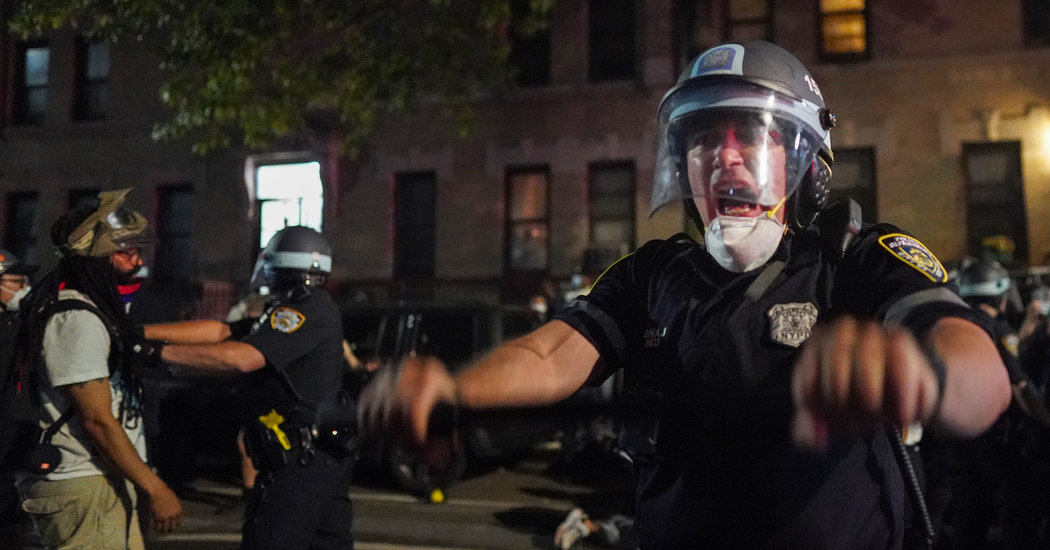
Look at the videos of George Floyd, or of the 75-year-old Buffalo protester being pushed down and left bleeding from the head — or simply at the way policing has done nothing to reduce carnage from drug overdoses.
After decades of incremental reforms, anti-racism activists are fundamentally correct about the overuse and overmilitarization of policing in America. Something is wrong when three million American students are in schools that have a police officer but not a nurse.
Yes, I still want someone to pick up when I call 911. But whatever terminology we use, it’s long past time to reimagine policing in America.
The Times is committed to publishing a diversity of letters to the editor. We’d like to hear what you think about this or any of our articles. Here are some tips. And here’s our email: [email protected].
Related reporting
More World News →
South Sudan’s Oil Looters: How Young Elite Gatekeepers Plunder Nation While Citizens Starve

General to Private: Kiir Crushes Economic Vice President in South Sudan's $1.7 Billion Corruption Purge
Paul Biya’s Re-Election: What Cameroon’s Political Longevity Reveals About Leadership and Governance in Africa