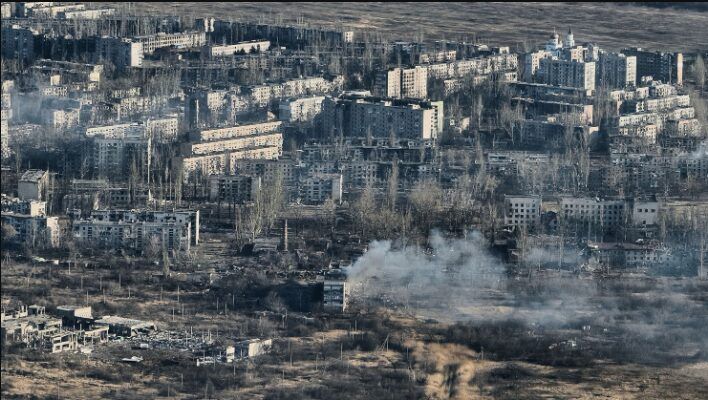
NEW DELHI — Sri Lanka has deployed additional troops to the city of Negombo, one of the sites of the Easter Sunday bombings, as tensions remain high after clashes late Sunday between Muslims and Sinhalese.
In a sign of raw emotions after the deadly attacks last month that killed more than 250 people, the clashes in Negombo, about 20 miles north of the capital, Colombo, started out as a traffic incident before quickly escalating into mob violence.
Three auto-rickshaws and two motorcycles were burned before the mob ransacked several homes belonging to local Muslims.
Hilmy Ahmed, the vice president of the Muslim Council of Sri Lanka, said “a few houses” were damaged in the violence. He said the unrest was brought under control after police commandos, the air force, and the army sent troops to the area and the government imposed a curfew immediately after the clashes. Mr. Ahmed said one of the drivers involved in the traffic altercation had been drunk.
“All police officials have been ordered to enforce the law strictly against any persons trying to create tension between communities,” said Ruwan Gunasekera, the spokesman for the Sri Lankan police.
The authorities have been on high alert for possible attacks against local Muslims, who make up about a tenth of the country’s population, ever since mobs of angry Christians targeted refugees in the area just days after the bombings. Hundreds of refugees, mostly from Pakistan and Afghanistan, were pushed out of their homes and forced to seek shelter in police stations and mosques, where they still remain.
After Sunday’s clashes, the government quickly reimposed a social media ban to prevent the spread of fake information that could further stoke communal hatred. The ban had been imposed for a week after the bloody bombings before being lifted.
Cardinal Malcolm Ranjith, the archbishop of Colombo, urged the government to close all liquor shops and bars in the Negombo area in the wake of the unrest.
“I appeal to all Christians, Buddhists and Muslims to be patient, show restraint and ensure the peace we maintained after the Easter bombings,” Cardinal Ranjith said on national television on Sunday night. On Monday morning, the cardinal visited a mosque in Negombo to urge unity in the face of communal tensions.
Prime Minister Ranil Wickremesinghe on Monday ordered a survey of the damage to public and private property and promised swift compensation for those affected.
Sri Lanka is a remarkably diverse country, where the majority Buddhists and minority Muslims, Hindus and Christians often share the same streets. But that diversity has also fueled bloody communal tensions that have been ignited by smaller incidents fanned by politics and social media.
Last spring, Sri Lanka was forced to declare a state of emergency in the Kandy area after Buddhist mobs went after Muslim shops and homes. The spark for that violence was also reportedly a traffic incident.
The country’s Muslims have felt particularly vulnerable since the Easter attacks — which were claimed by the Islamic State — as the government has tried to make up for security lapses that led to the bombings by casting a wide net in searches and arrests of potential suspects.
Sri Lankan security agencies failed to act on repeated warnings, both from foreign intelligence agencies as well as local Muslim leaders, about the small local affiliate of the international terror group that carried out the attacks.
Sweeping raids across the country now are often followed by television news cameras, even if they only result in confiscation of small arms and swords. After the attacks, the government banned face covers in what was seen as a move that singled out Muslim women, even though officials did not specifically mention the Muslim community.
Many Muslim leaders fear such an environment will only further stoke suspicions and fan pre-existing feelings of marginalization.
Rauff Hakeem, a cabinet minister and the leader of the biggest Muslim party, said security forces should differentiate in their raids between local criminal elements and terror suspects. He feared that overzealousness in crackdowns could further stoke tensions.
“That’s a worrying factor for all of us,” Mr. Hakeen said. “The vulnerability can result in serious feelings of insecurity. We should not build up fertile ground for radicalization further.”
He added: “They are finding ghosts behind every bush as far as Muslims are concerned.”
The tensions came as Sri Lanka was trying to return to a sense of normalcy, with schools opening Monday after being closed since the bombings.
Thousands of soldiers accompanied by sniffer dogs combed schools across the island for hidden weapons and explosives, in what was seen as a campaign to give parents assurance. Seven thousand military personnel were involved in searching more than 10,000 schools in what the army called a “mega-clearing operation.”
Only students from Grade 6 and above started school on Monday, with younger children to begin classes at a date that has yet top be announced. Ahead of the reopening, Education Minister Akila Viraj Kariyawasam sought to reassure parents that it was safe for children to attend classes, but schools remained largely empty on Monday.
Related reporting
More World News →
General to Private: Kiir Crushes Economic Vice President in South Sudan's $1.7 Billion Corruption Purge
Paul Biya’s Re-Election: What Cameroon’s Political Longevity Reveals About Leadership and Governance in Africa
From Power to Prison: The Fall of France’s Former President Nicolas Sarkozy